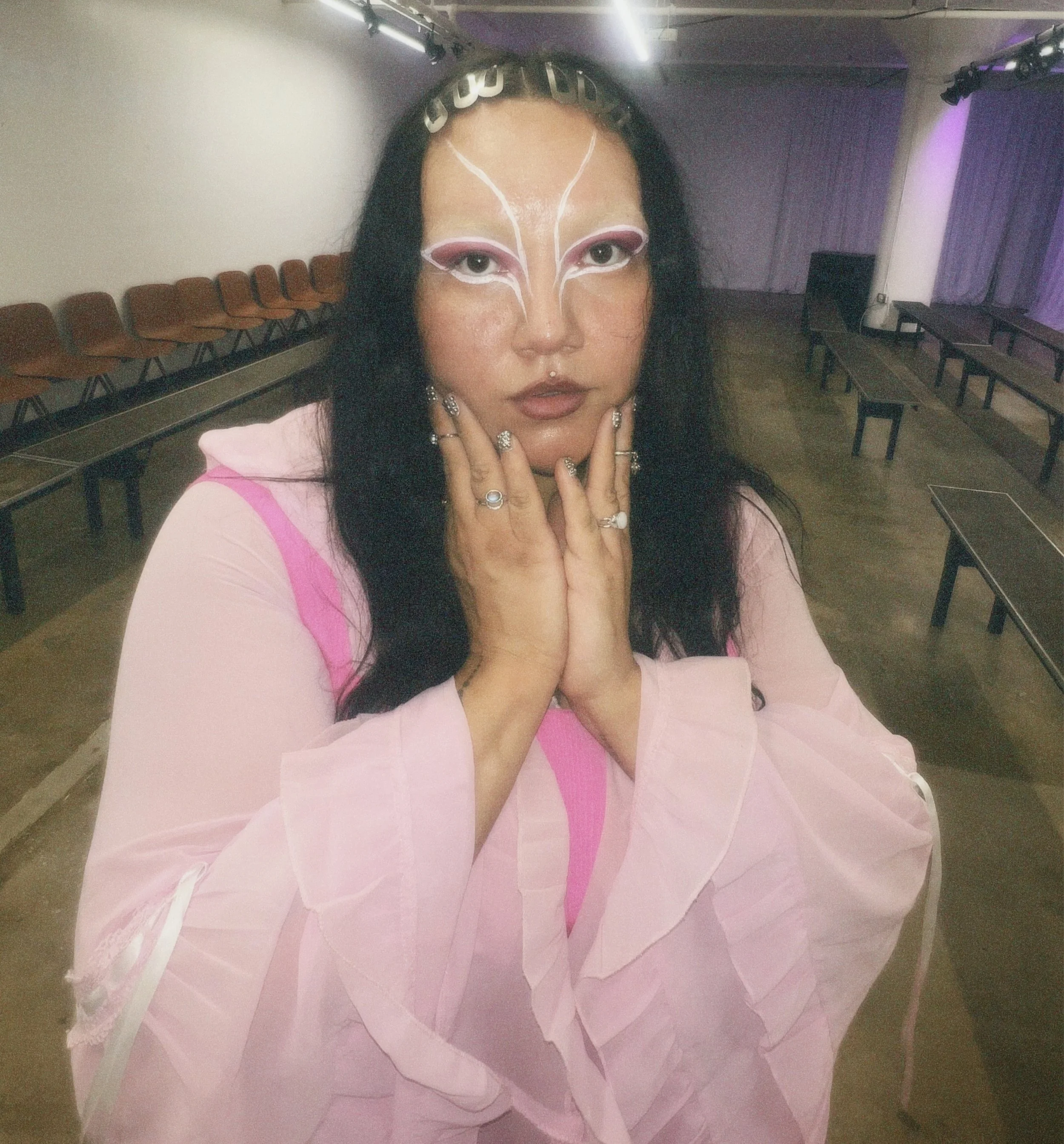
The night before debuting her designs in New York, Cheyenne Rain LeGrande buzzes around excitedly, glittering from head to toe in a bright pink apron dress. Her platform sneakers and blush-colored sleeves stand out against the white walls of the American Indian Community House, which has cleared a sweep of concrete flooring for the runways of Indigenous New York Fashion Week.
Now in its second inception, the show serves as a launchpad for Indigenous designers, models, creatives, make-up artists, hair artists, storytellers, and dreamers of all kinds, all of whom are right now, even after the conclusions of the day’s final fittings and rehearsals, buzzing around the glass-walled meeting rooms behind a long, black curtain divider which runs across the central gathering space.
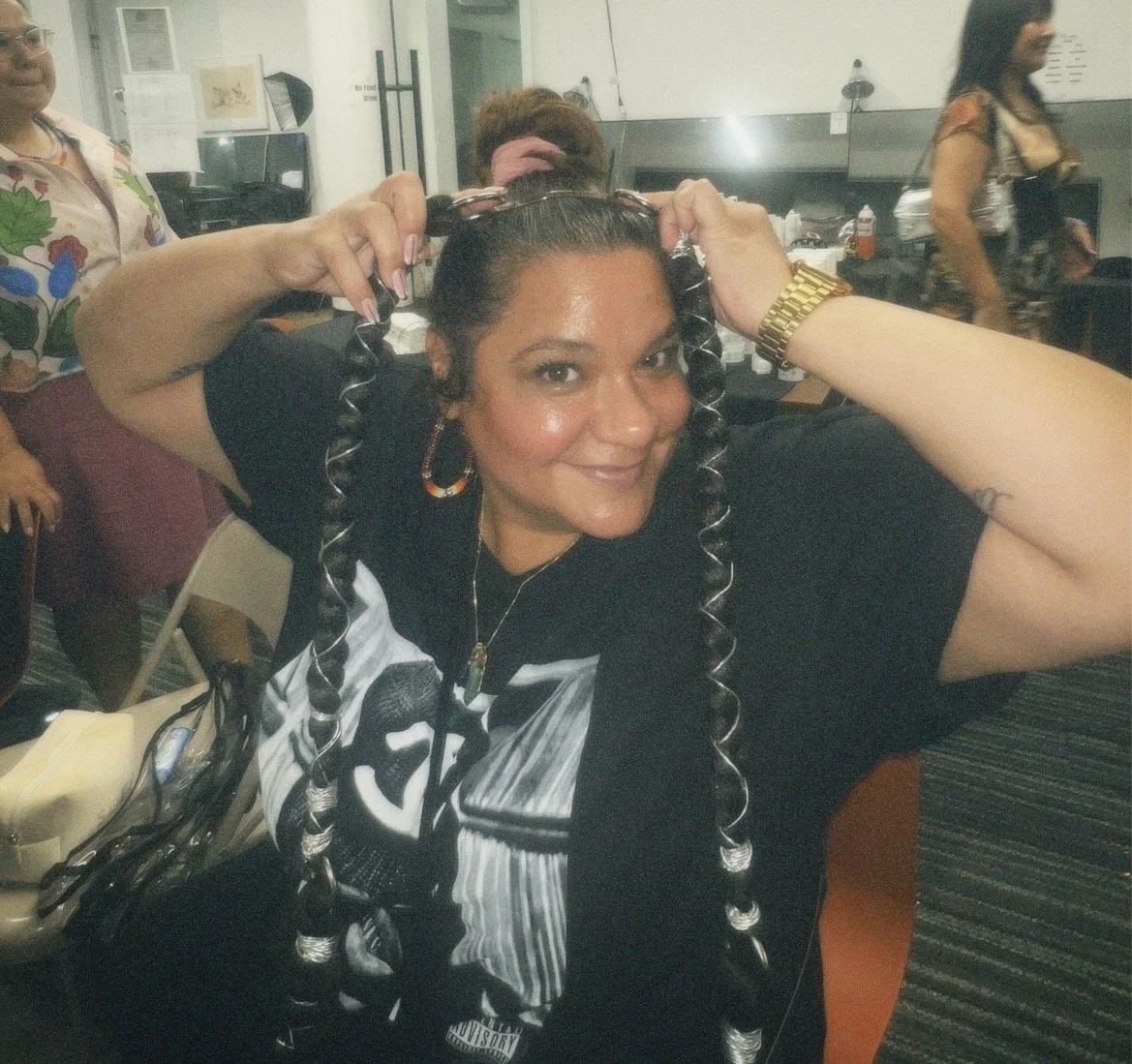
Amy Farid (Osage) poses with a hair piece backstage.
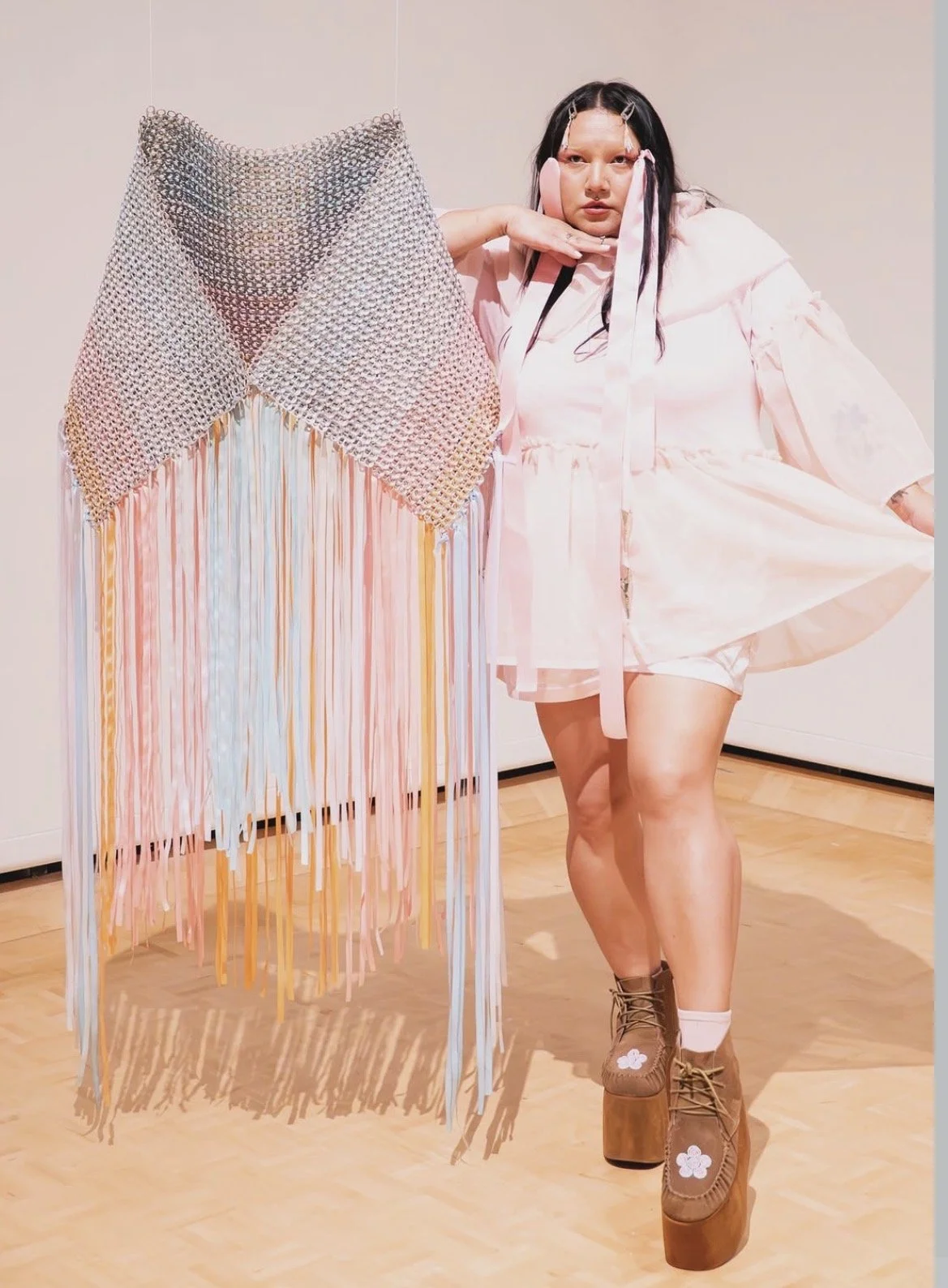
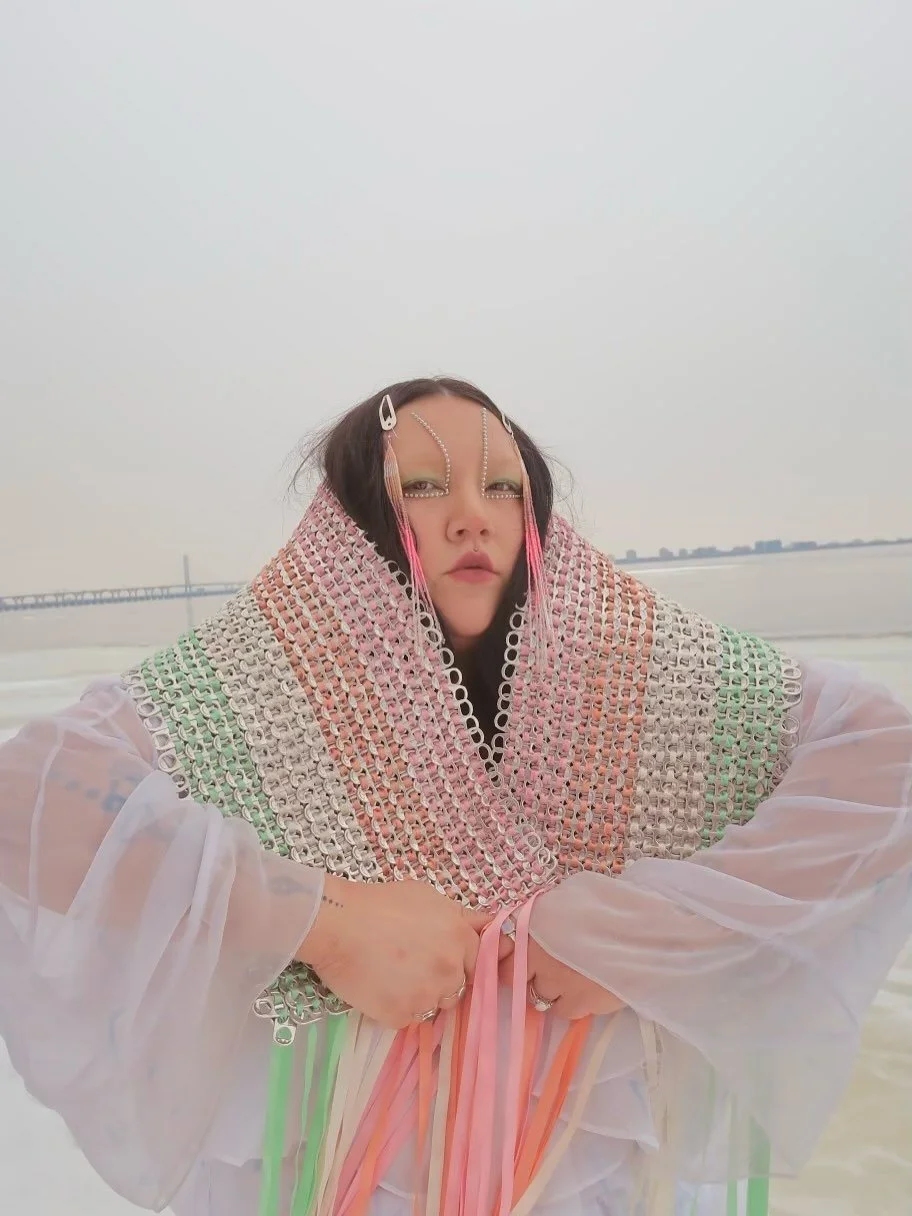
When we find Cheyenne in the middle of the now-empty runway, she’s already being interviewed about her story and her designs, which range from gathered-material masterpieces (see: her soda tab fancy shawl) to edgy takes on traditional favorites (see: her hand-painted platform moccasins).
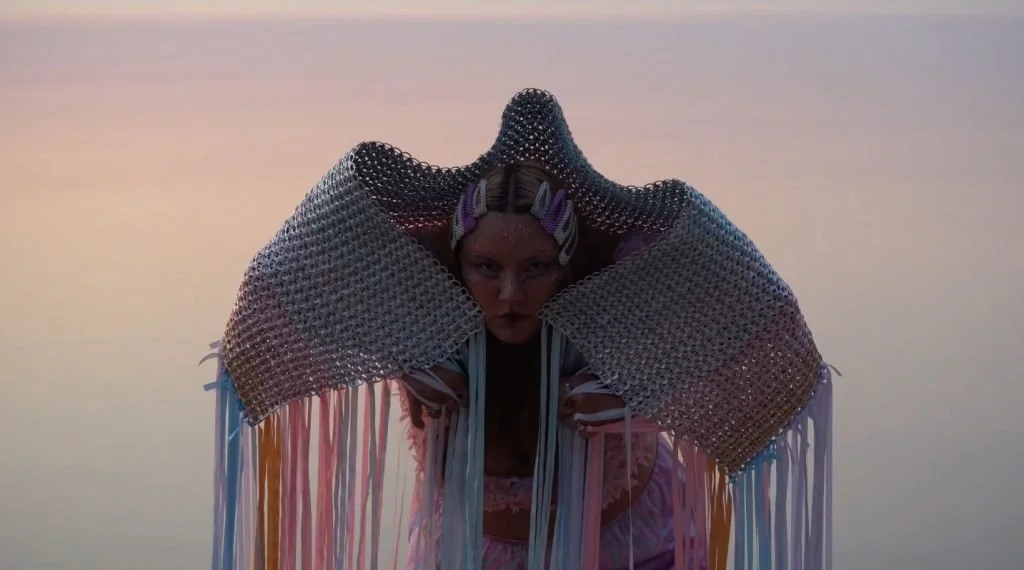
© Cheyenne Rain LeGrande ᑭᒥᐊᐧᐣ, Mullyanne Nîmito, 2022
The bepsi tab shawl is a sculptural garment made from 3300 beer/ pop can tabs that Rain LeGrande and her community have been collecting for the past 5 years (via OBORO.net)
It’s been an exciting few months for the emerging designer from Bigstone Cree Nation, whose debut in New York, also known as Lenapehoking, marks a personal milestone for the artist.
Even with all the excitement, however, Cheyenne still makes time to talk to Book Club (the old fashioned way: through writing!) to offer some big sibling designer advice and reflections on her busy week in Manahatta.
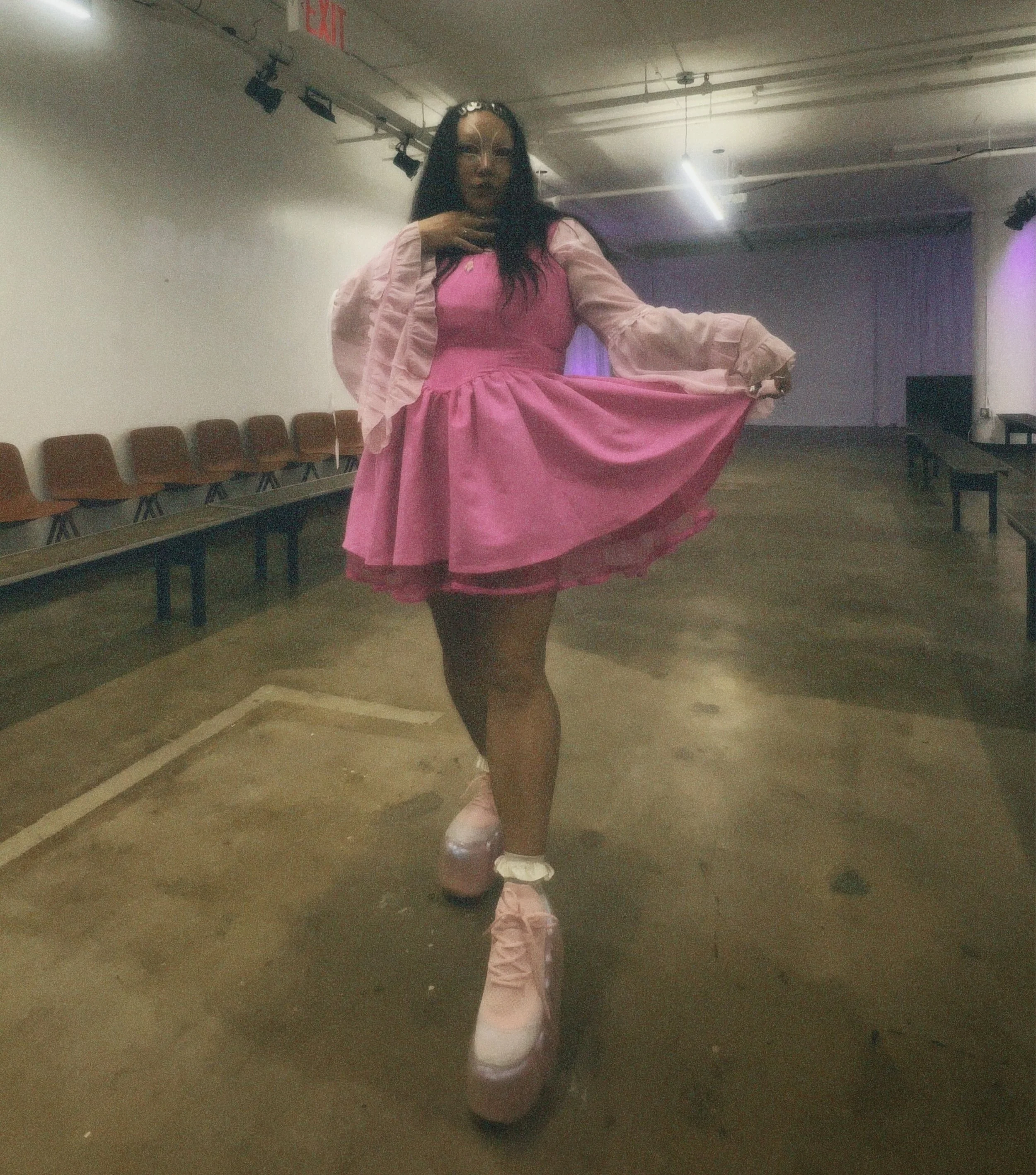
NGBC: Tell us about your inspirations, how you started in fashion. Are there any influences that you feel like you had as a child that shaped your approach to your art (TV shows/movies, music, media, family, etc.)?
My sibling Dusty LeGrande who is the designer of Mobilize has always inspired me. Over the past 10 years we’ve collaborated on many collections together.
To be able to share my own collection in New York was so special.
Dusty has always been so supportive. Tears of gratitude and joy hit me backstage when he came to give me a hug after my show. How special to get to create art with my family.
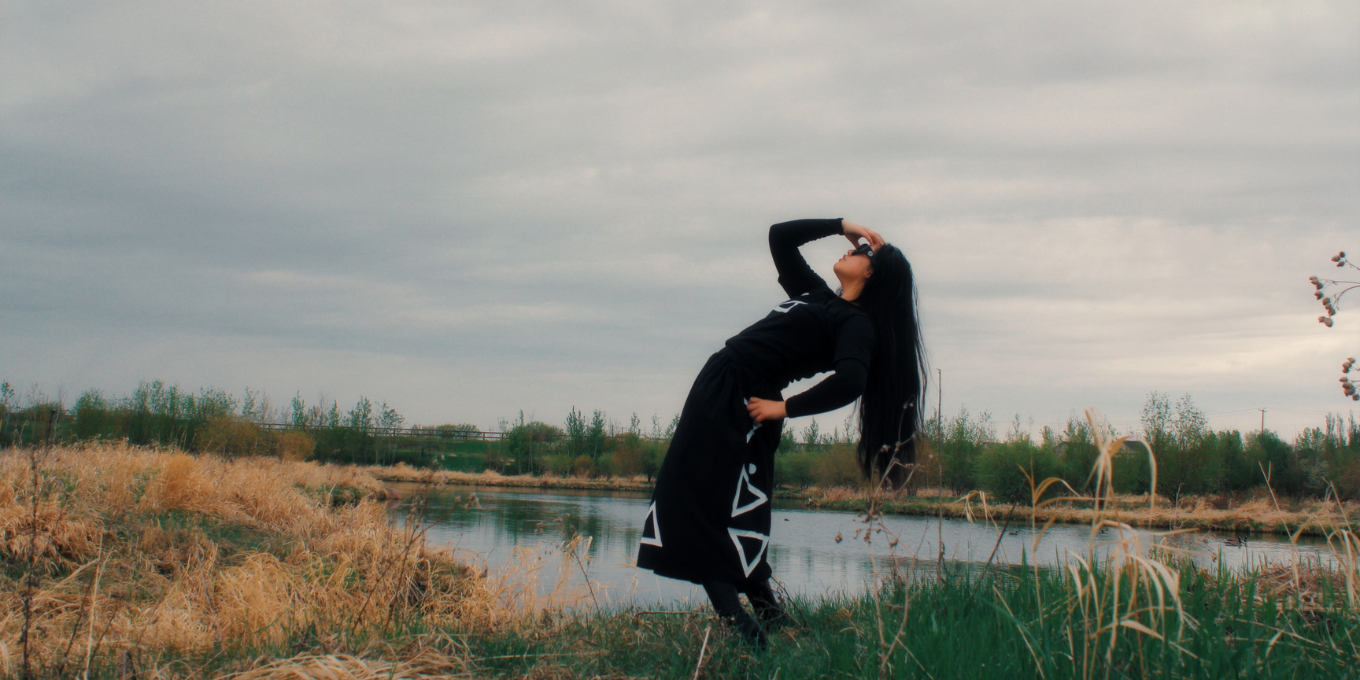
ELLE Canada (Photo by Dusty & Cheyenne LeGrande)
Growing up, I felt most nurtured being around Nîtisânak (my family). Both of my parents have always supported my dreams to be an artist and surrounded me with so much love.
I also always feel nurtured when I am visiting Bigstone Cree nation. It feels like the land is holding me. Today I am on my way to visit my Kokum, and me and nimama stopped at Rock Island and picked some mint. Medicine from the land comforts me and makes me feel nurtured and loved.
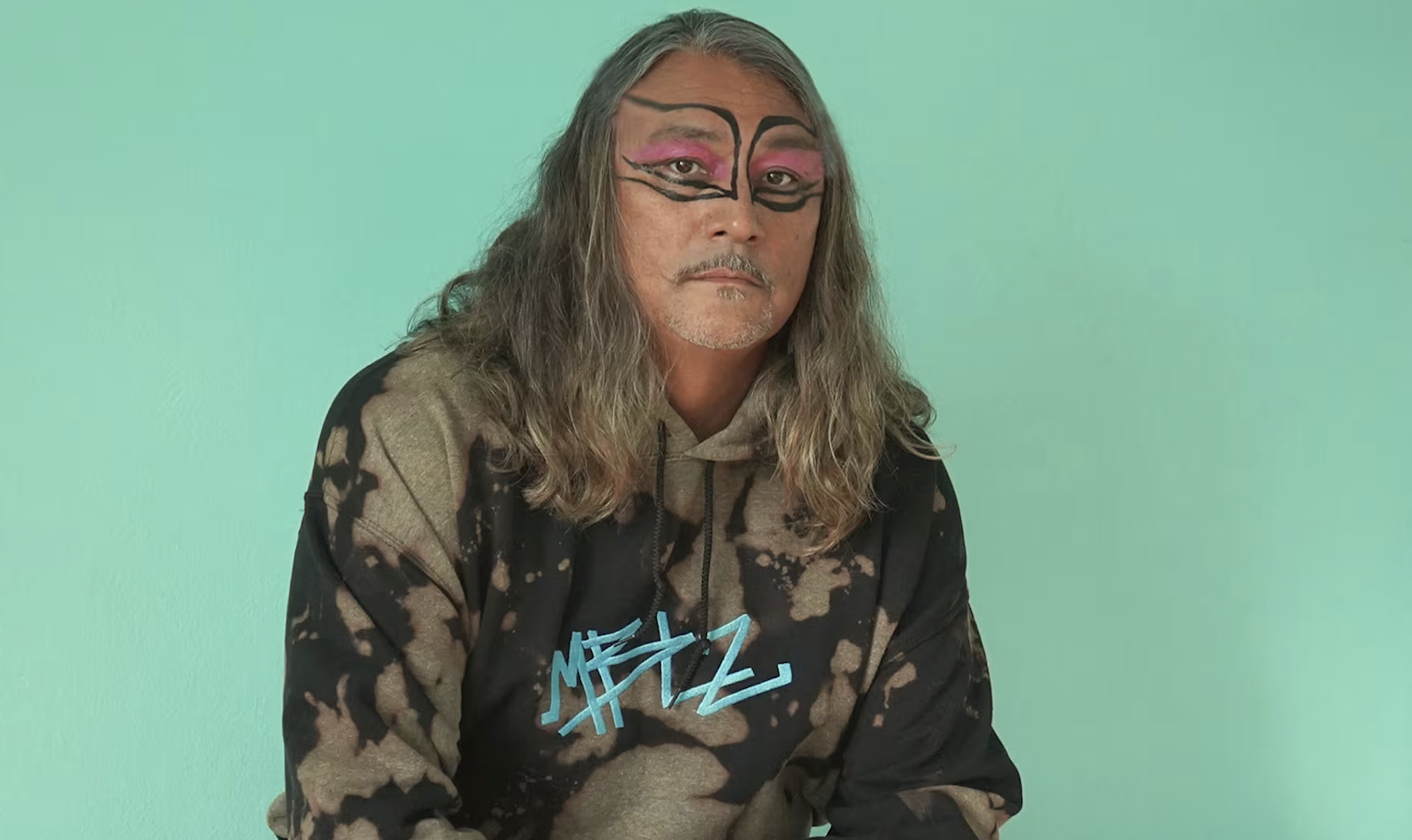
NGBC: What are your reflections on having an event in New York City, or Manahatta?
Cheyenne: It was so special to gather in Lenapehoking and connect with Indigenous kin from all across the world. Coming together to celebrate our fashion was a magical experience.
Of course it’s been a dream to get to share my art in NYC, so to get to share my collection and be part of the official NYFW calender was so miywasin (good).
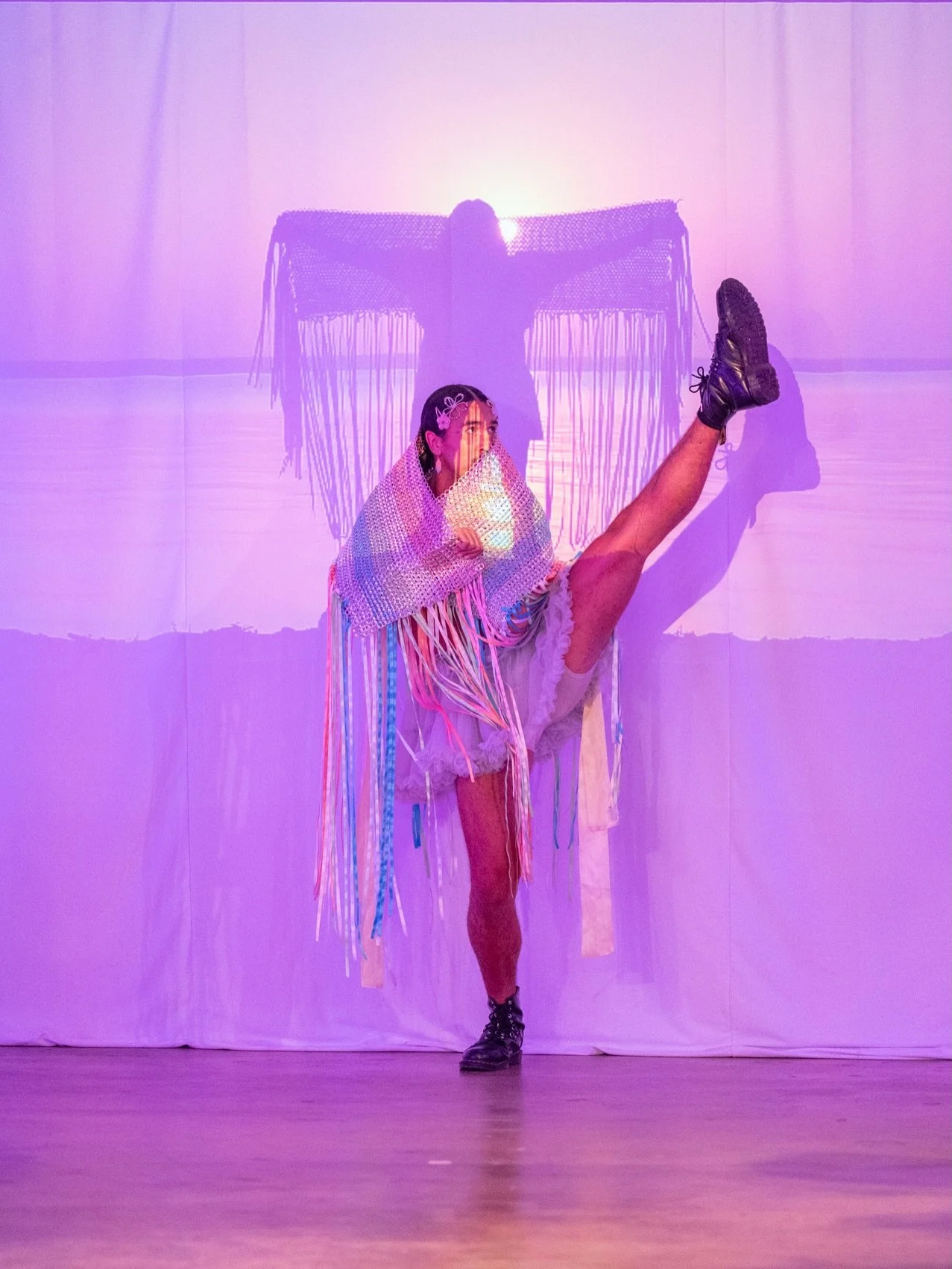
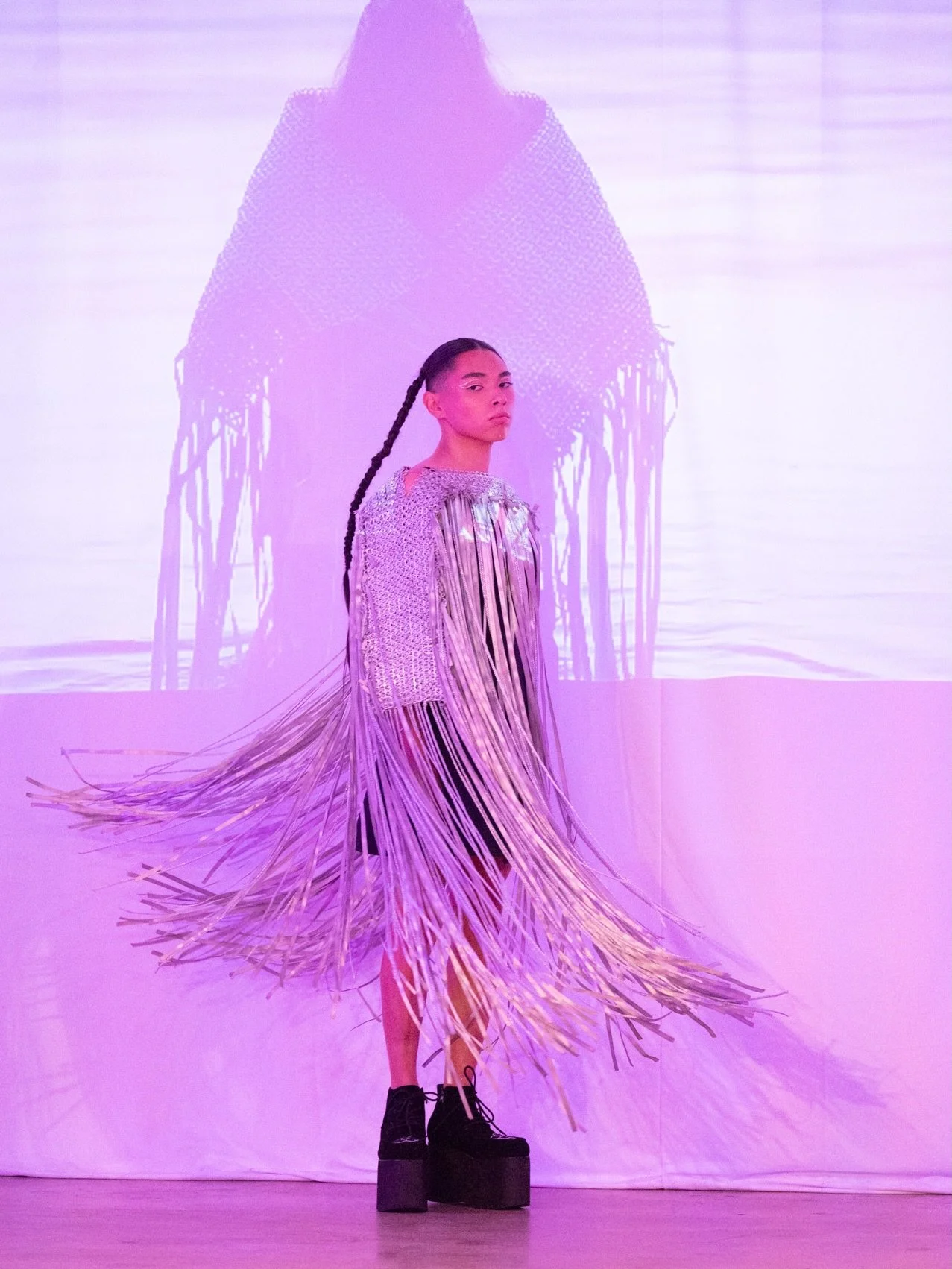
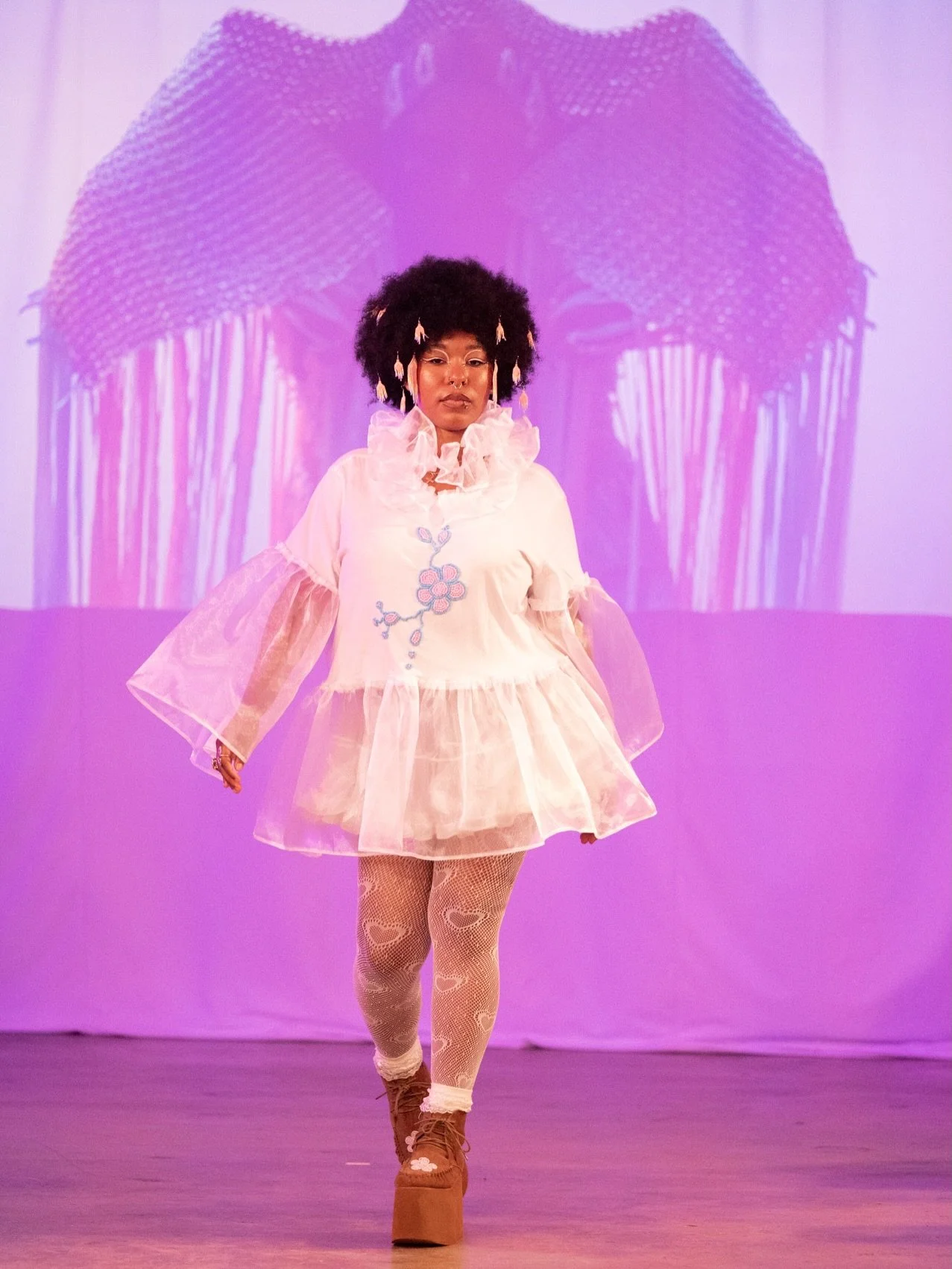
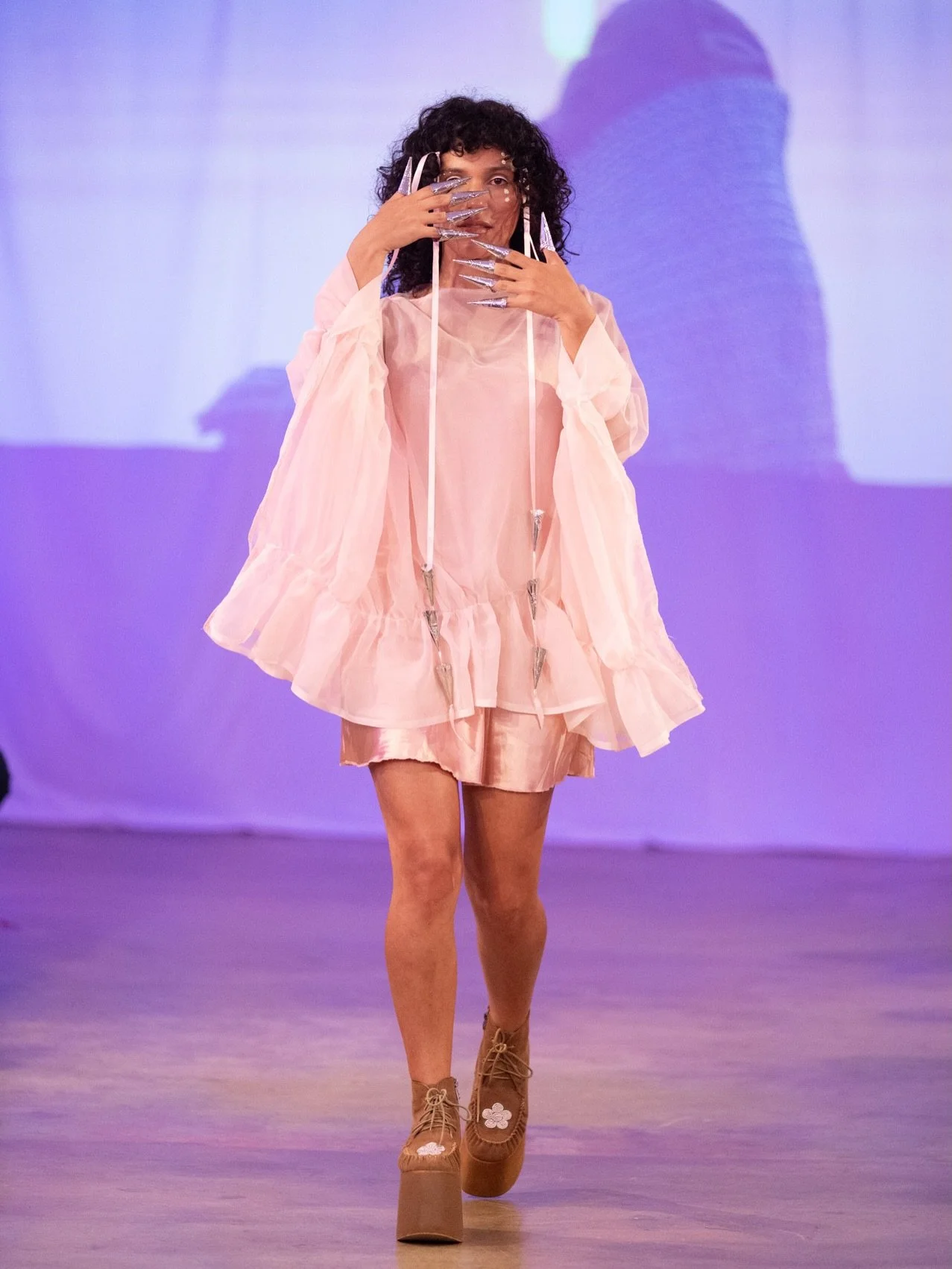
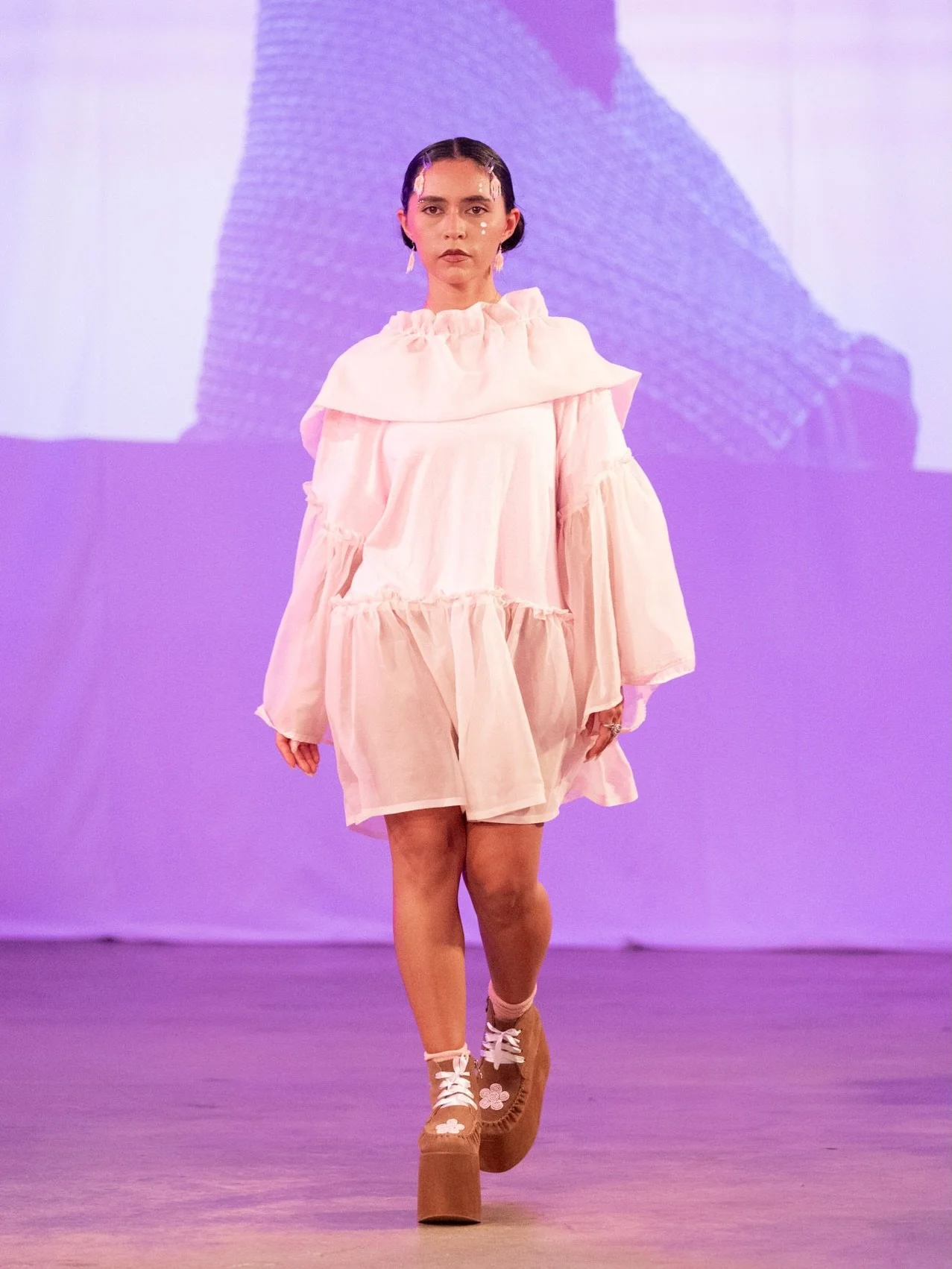
NGBC: Can you describe in a few sentences (or words) the energy backstage, leading up to, and after your show?
It was so exciting! Getting time to connect with my models, laugh and see how they felt in my garments was something I’ll never forget!
Seeing the vision come to life with the makeup and hair was truly iconic.
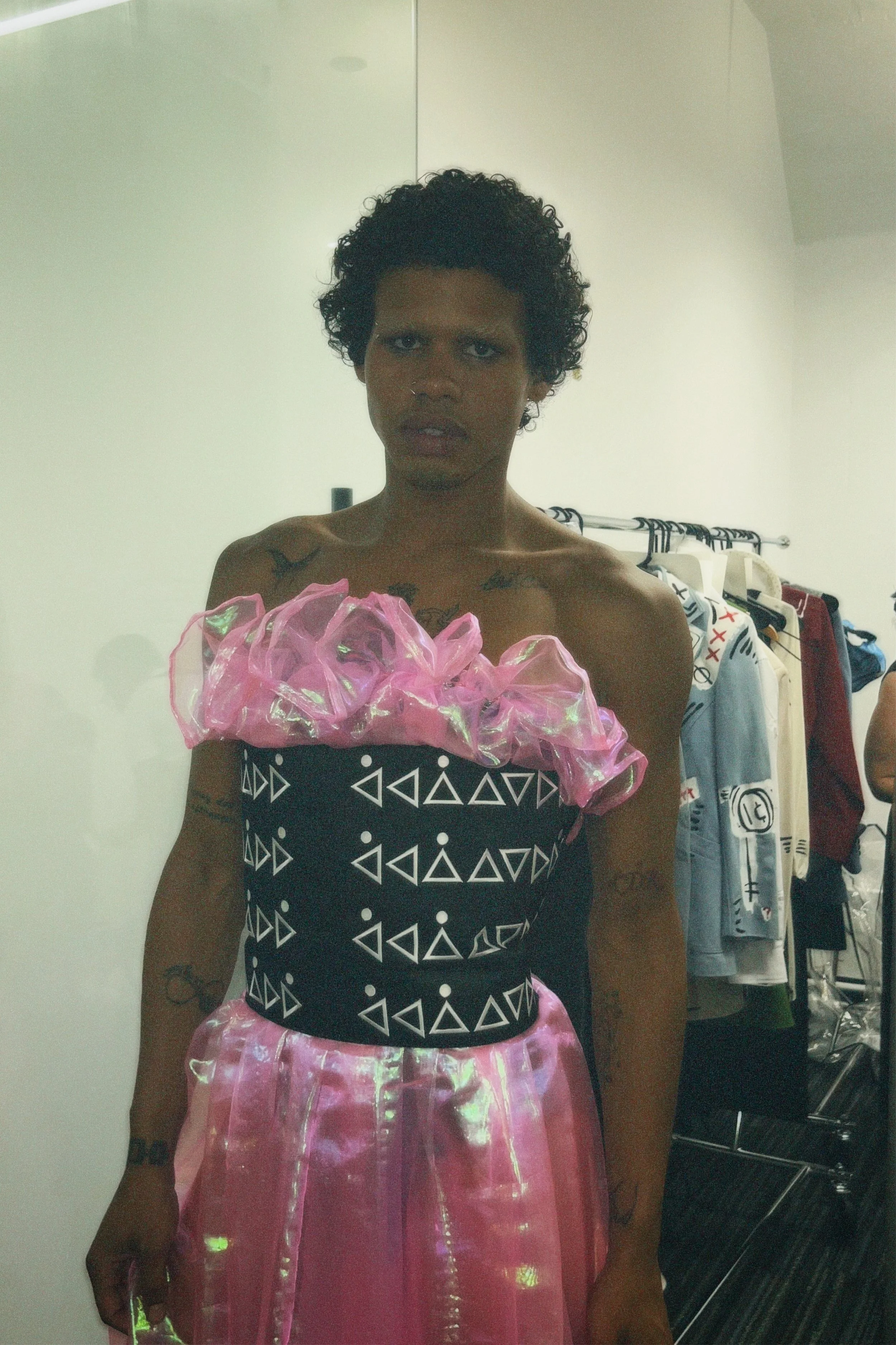
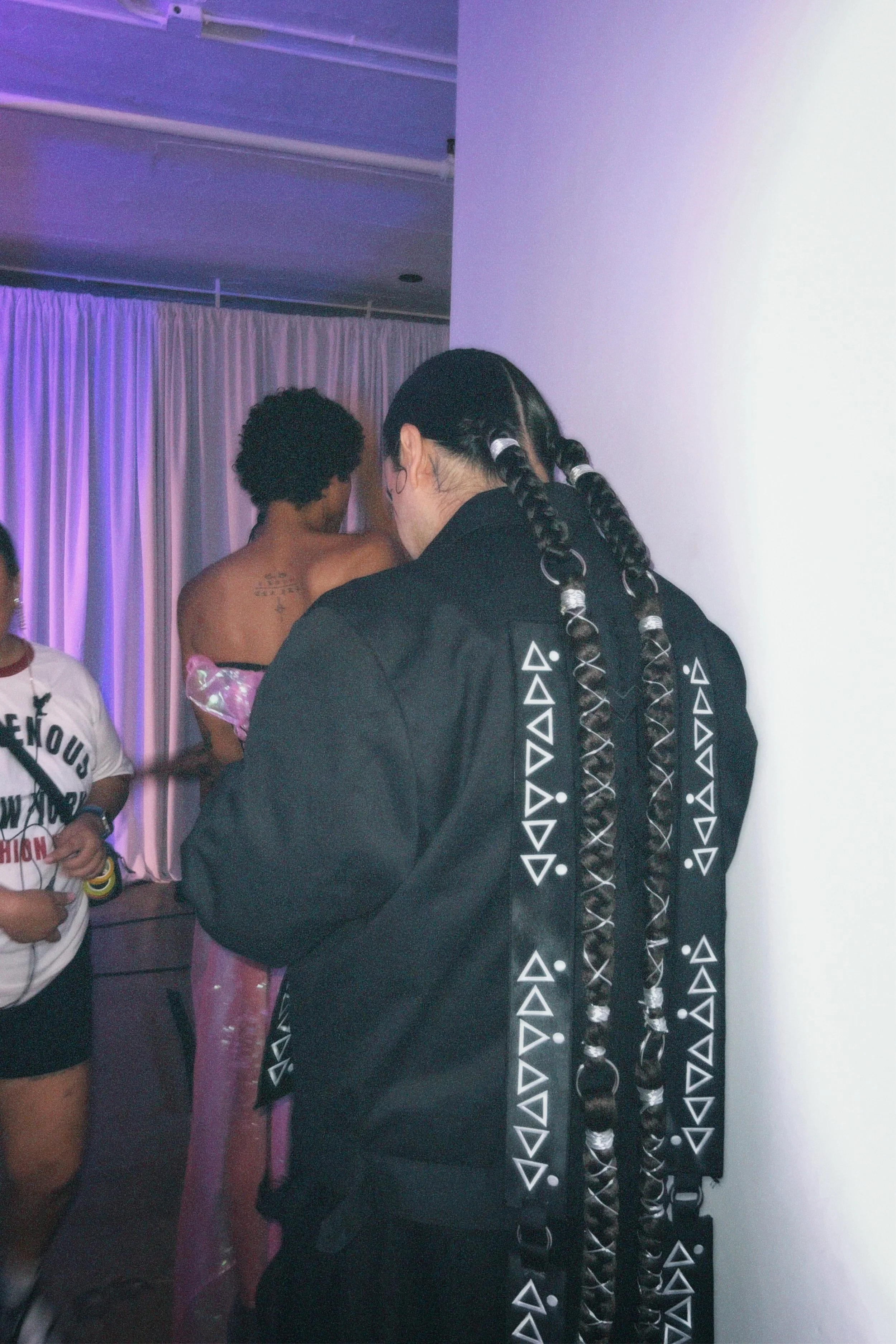
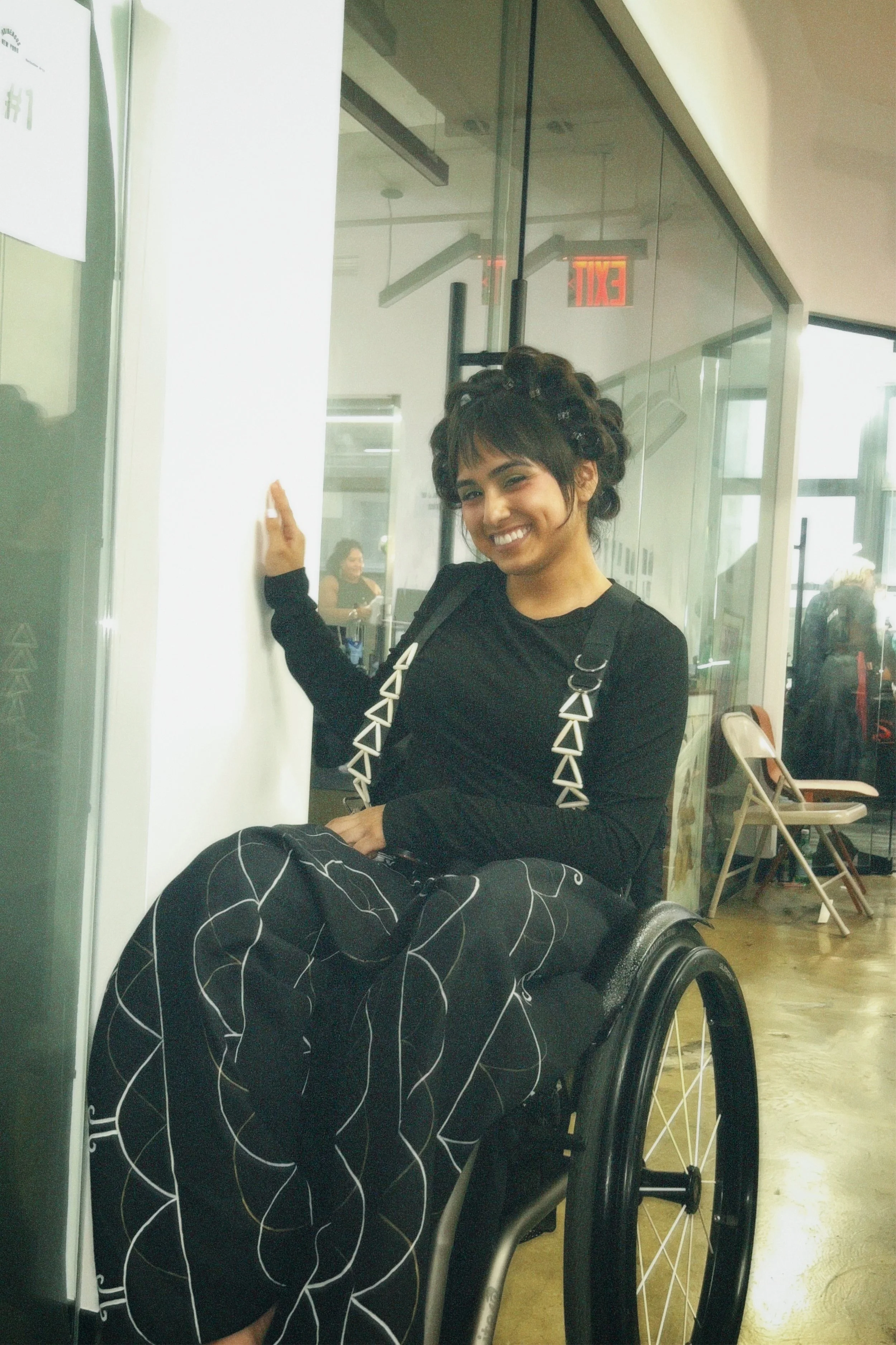
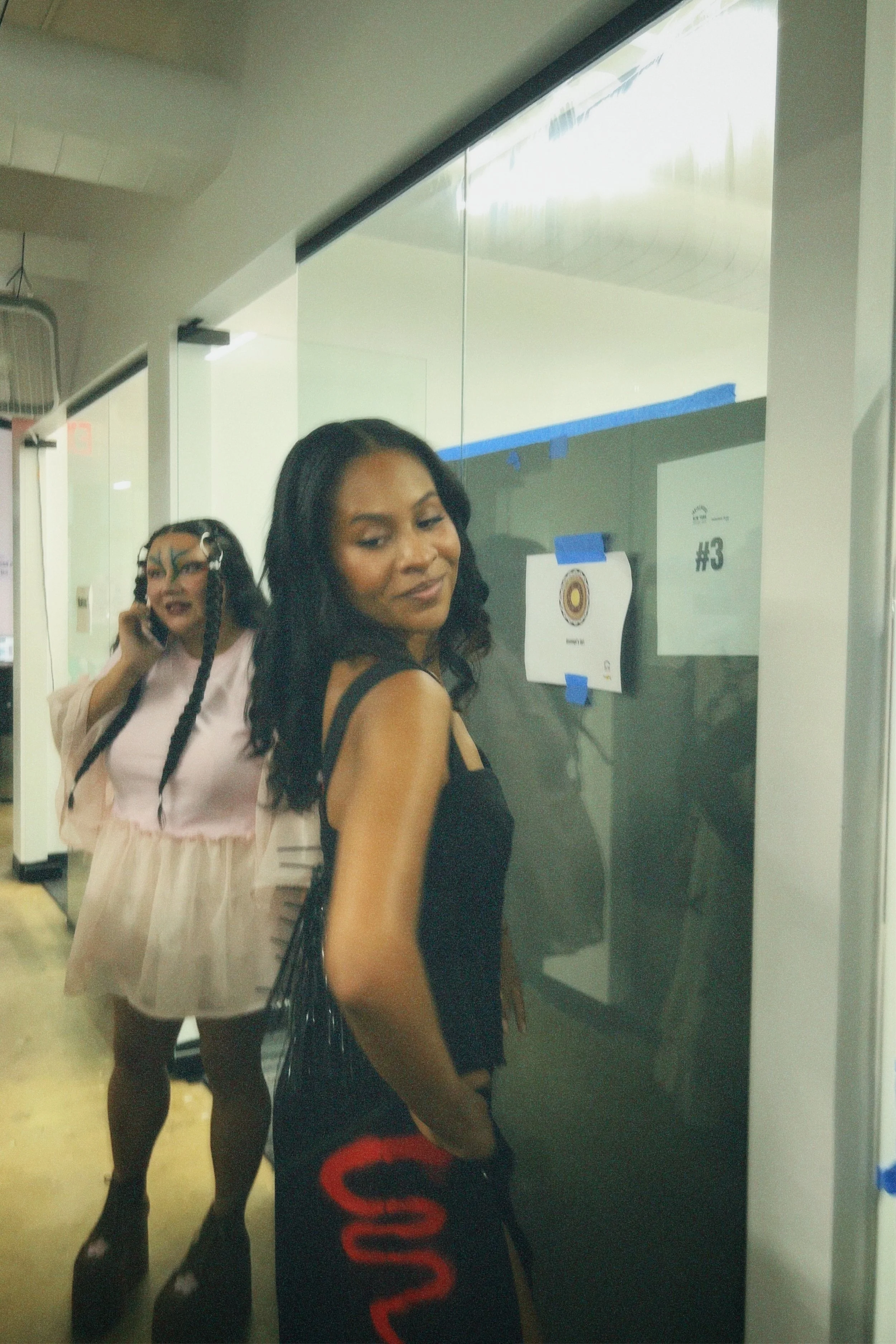
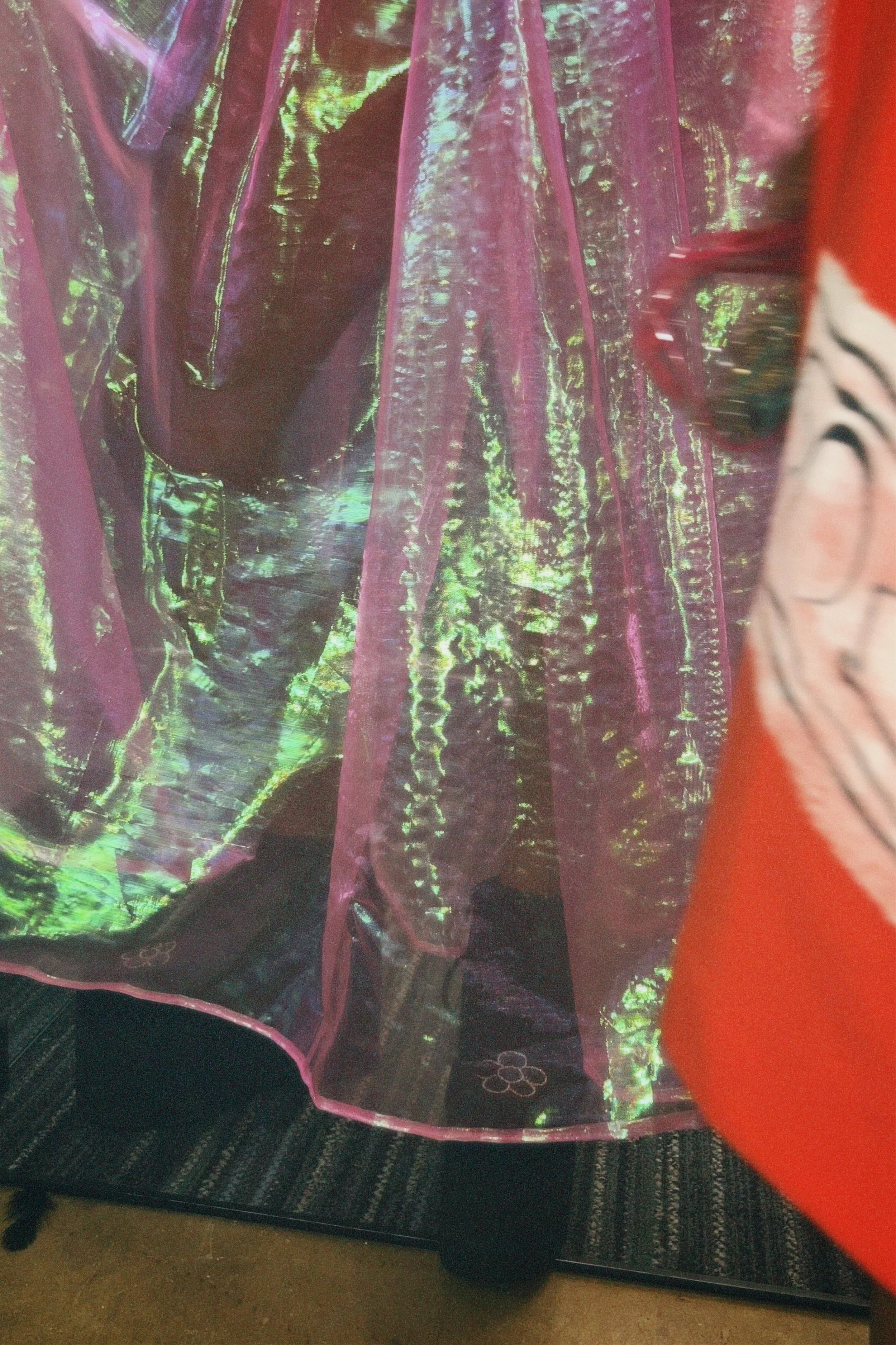
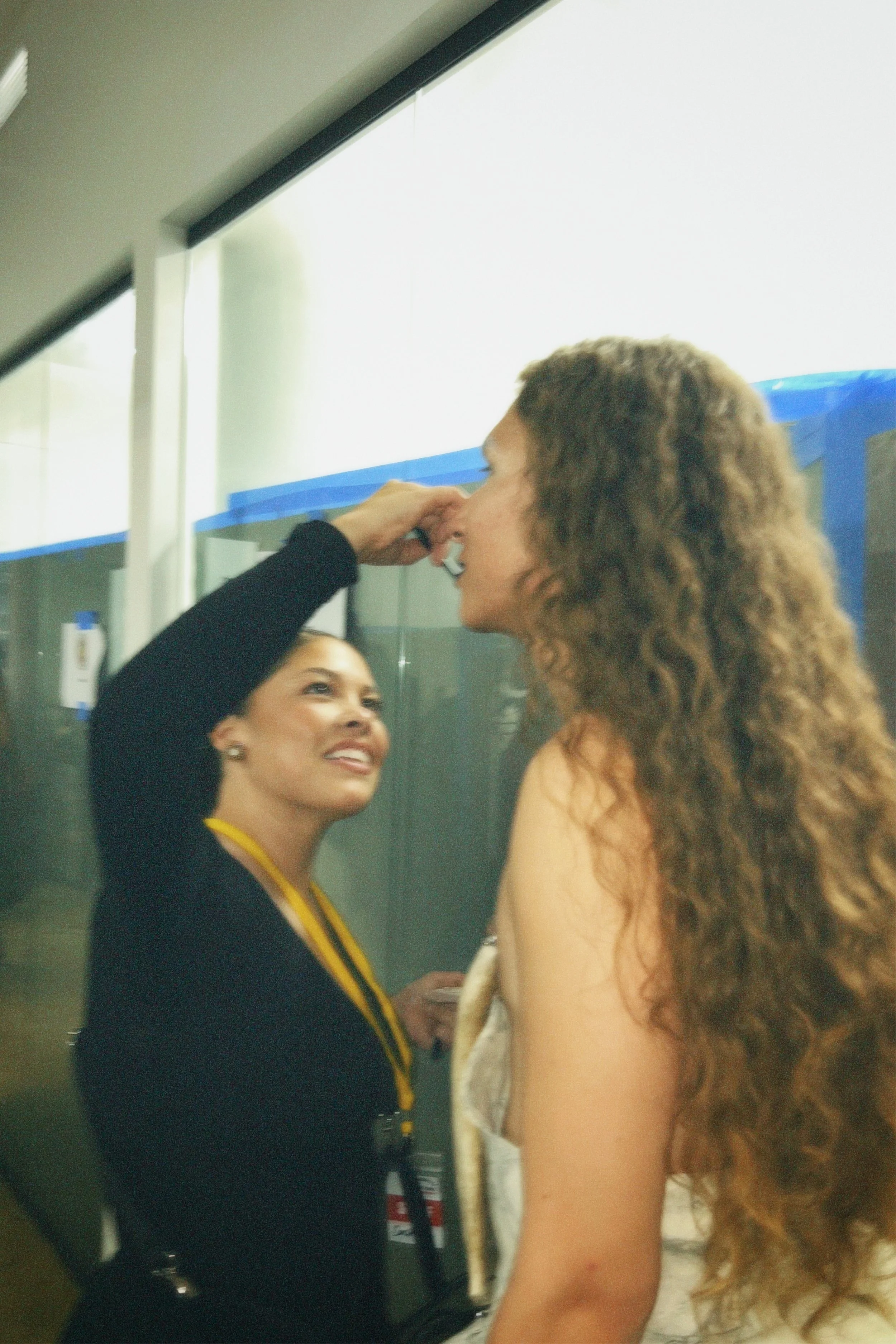
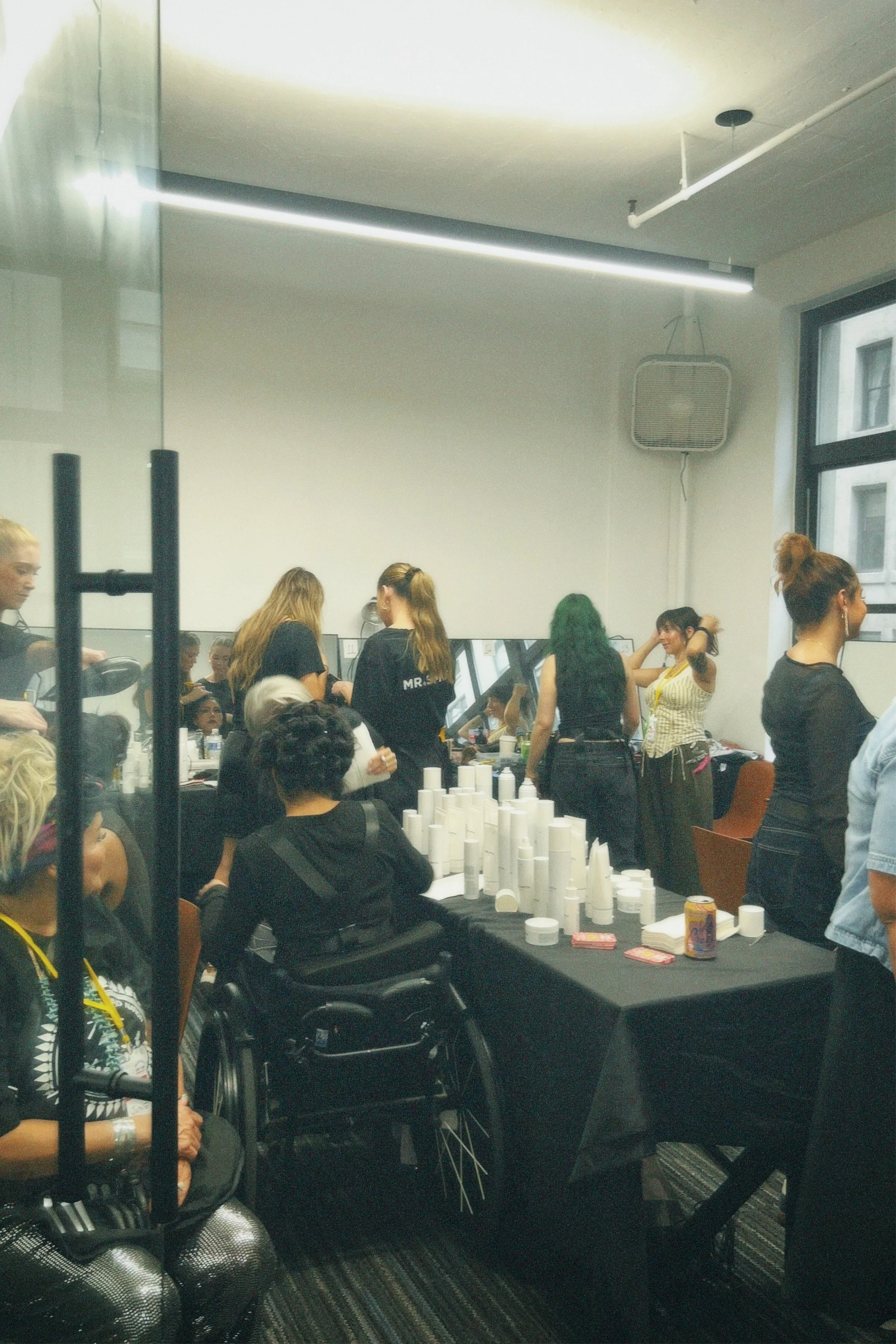
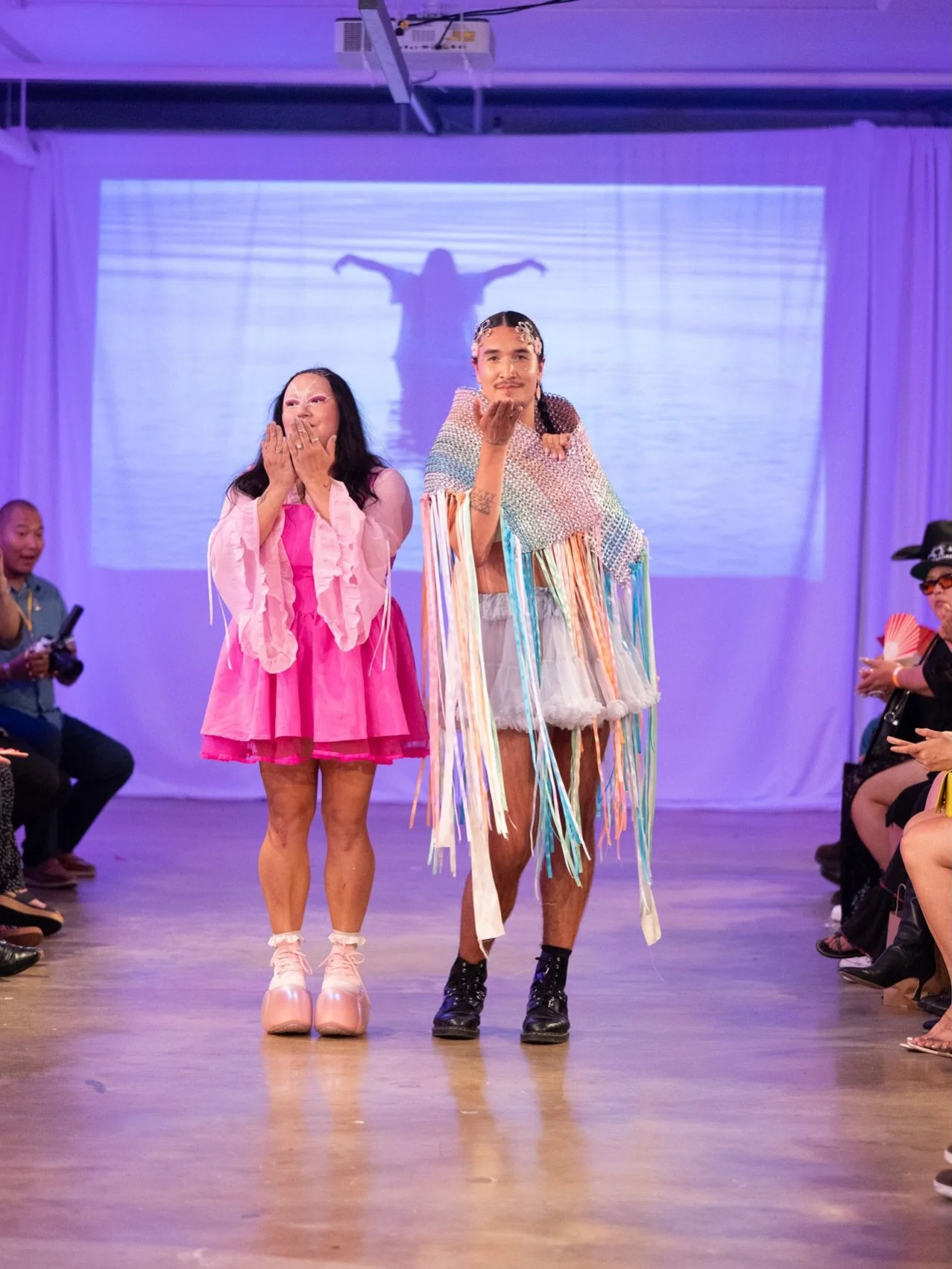
Backstage, Cheyenne assists her brother Dusty LeGrande, the designer behind Mobilize, a streetwear brand known across First Nations fashion circles for its strong messaging and modern silhouettes. Mobilize showed alongside Cheyenne’s own eponymous designs.
NGBC: What are your hopes and dreams for the future of Indigenous fashion? What do you want to tell youth who want to pursue a path in fashion and/or the arts?
Pawâta- to dream.
I hope Indignenous fashion continues to push the boundaries of what fashion can be. I really love seeing Indigenous futures through fashion and I hope that continues. For me and my family, fashion is way of storytelling. It is an expression of our identities. It is an expression of our resilience and beauty.
After my show I received images from my family of my 4 nieces and nephews back home all crowded around a laptop watching my fashion show live. What a precious moment. When I was child I never knew that this was possible. I didn’t get to grow up seeing Indigenous fashion in media. I didn’t know that I could share my art and fashion across the world. So I would want youth to know that anything is possible. You can live your wildest dreams. Art for me was a way to heal and express myself. I hope that art and fashion continues to be like that for the next generations.
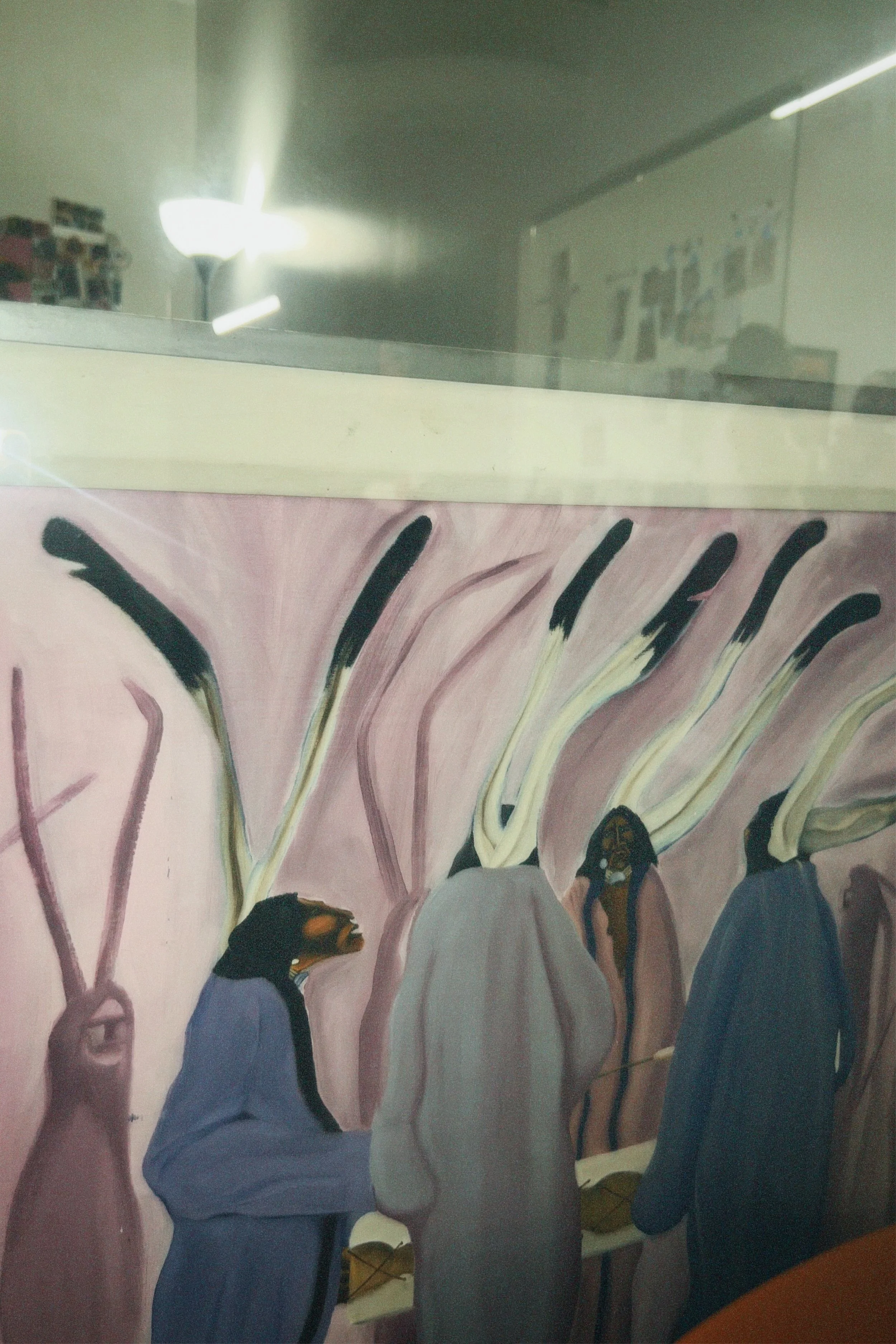
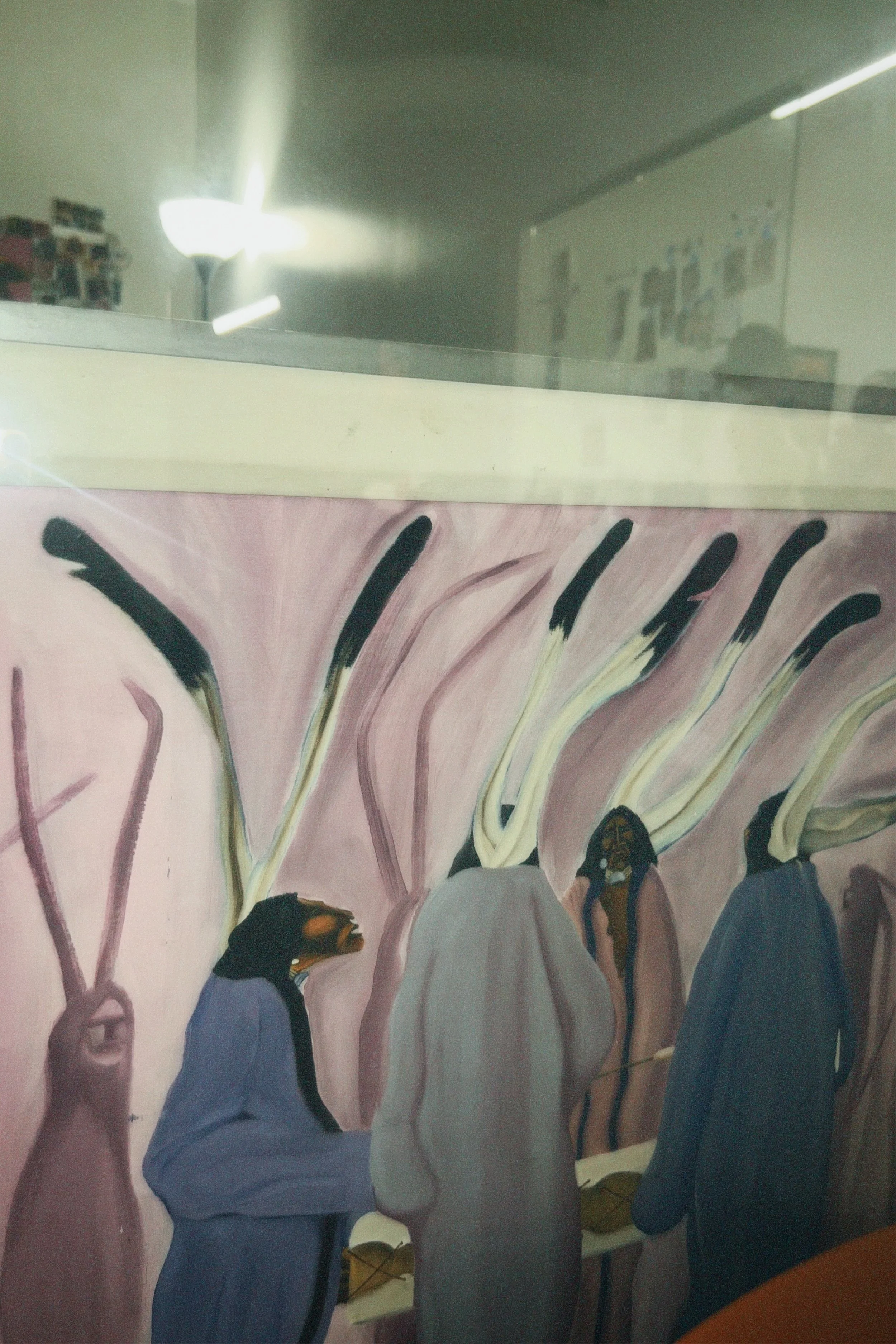
← Paintings and portraits line the walls of the American Indian Community House (via NGBC)
AICH was founded in 1969, by Native American volunteers as a community-based organization, mandated to improve the status of Native Americans, and to foster inter-cultural understanding.
Describe briefly the link between art, fashion, and traditional materials for you, and how you express yourself creatively. For example, the platform moccasins: How did you come up with this design, how many hours went into the process, and what do you want to experiment with next?
I’m in a generation where our nanâtawihowin (healing) has allowed me to be able to reclaim many traditional practices like moccasin making. My auntie Christine taught me how to make moccasins but if you know me— you know I never wear a flat shoe. So this concept came organically. I thought, how do I wear my traditional shoes but also stay authentic to my identity?
So I created a hybrid shoe, a platform moccasin.
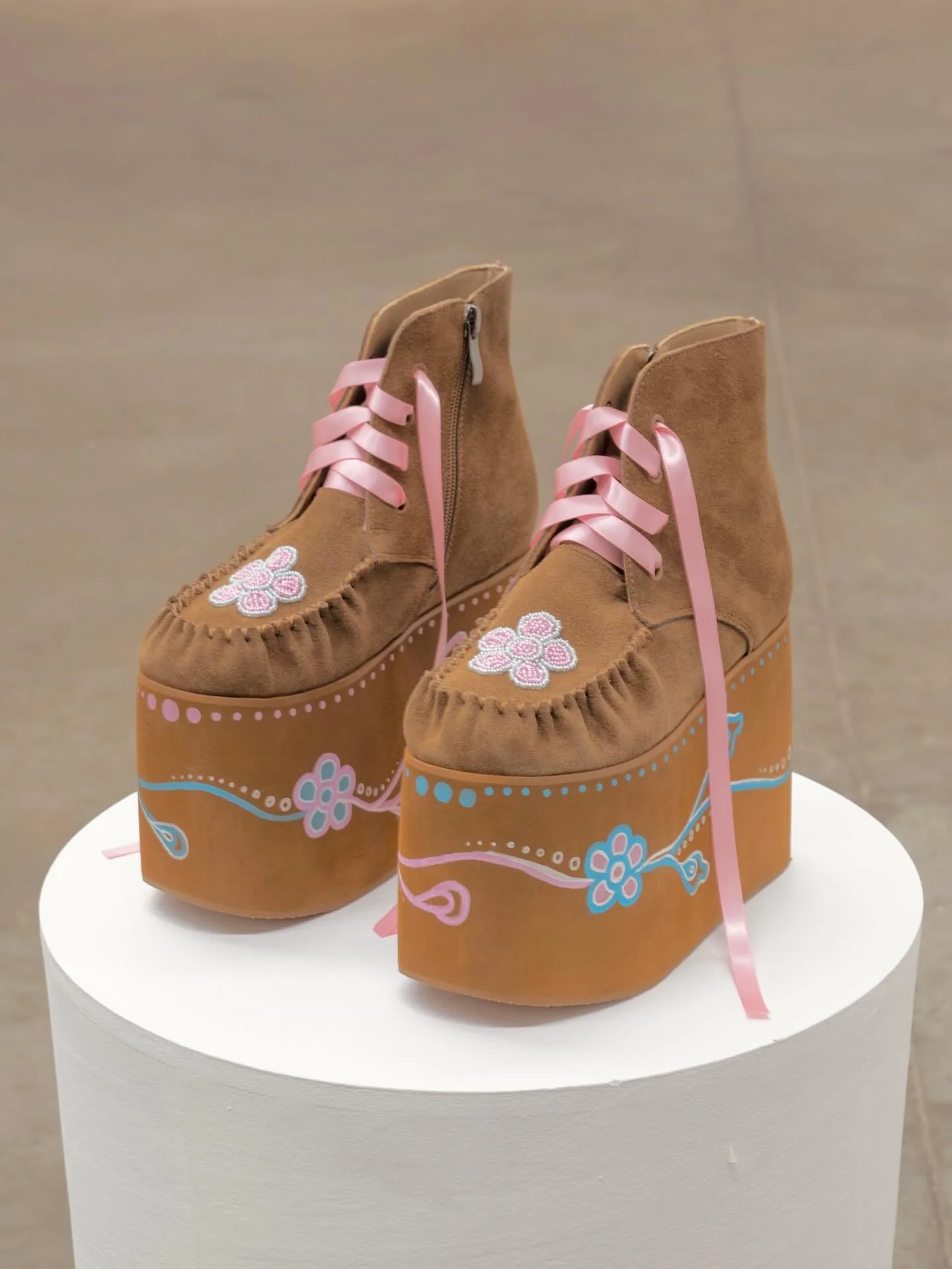
← Platform Moccasins, via Cheyenne Rain LeGrande
For me art, fashion, tradition, all flow in out of one another. The next art form I’m excited to explore is music.
The song that played on the runway was my first original song called “Nehiyaw Alien.”
It’s written half in Nehiyawewin and half in English.
Alsooooo my next platform moccasins will be launched this year! They debuted on the runway in NYC. They are black with silver beaded flower. So keep an eye out for those!
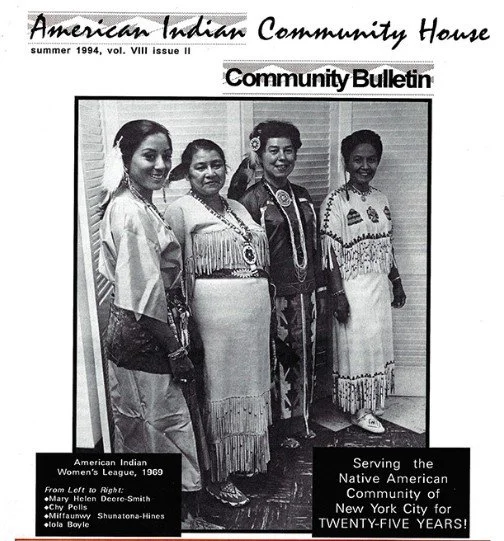
AICH bulletin from 1994 (via villagepreservation.org)
NGBC: Okay, finally, we have to ask. What are your favorite books right now?
Cheyenne: Omggg !
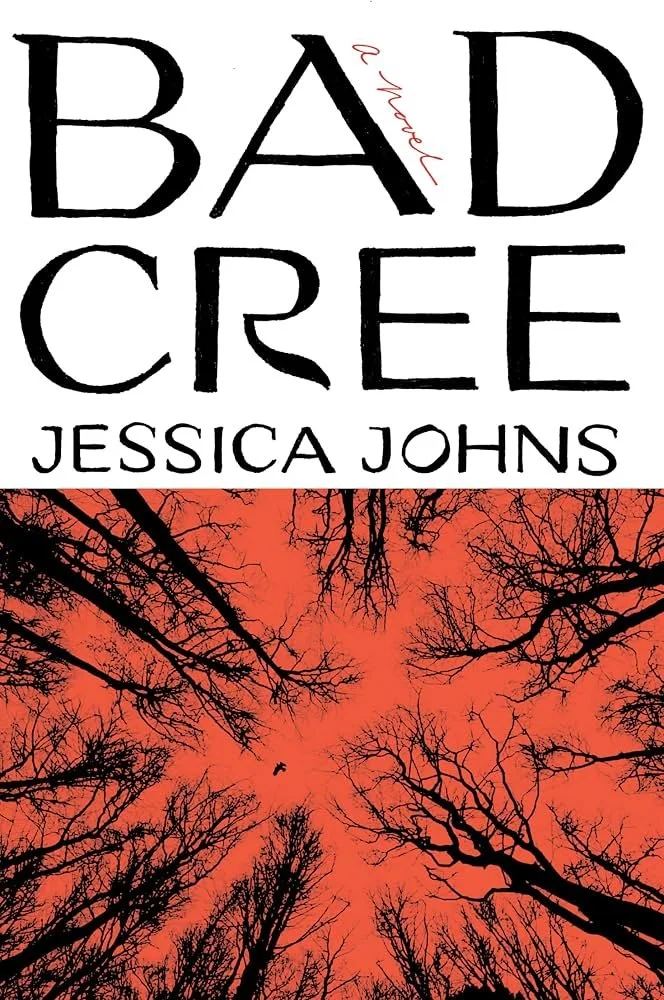
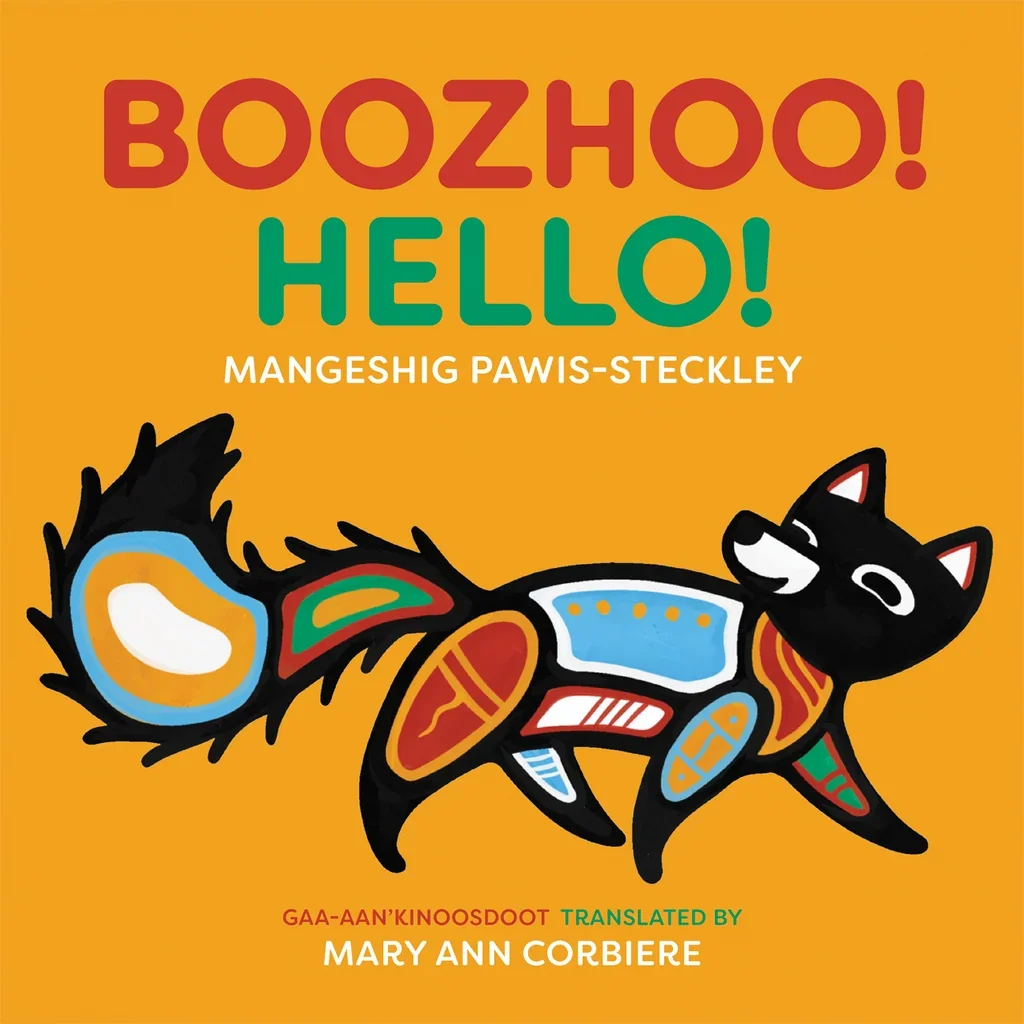
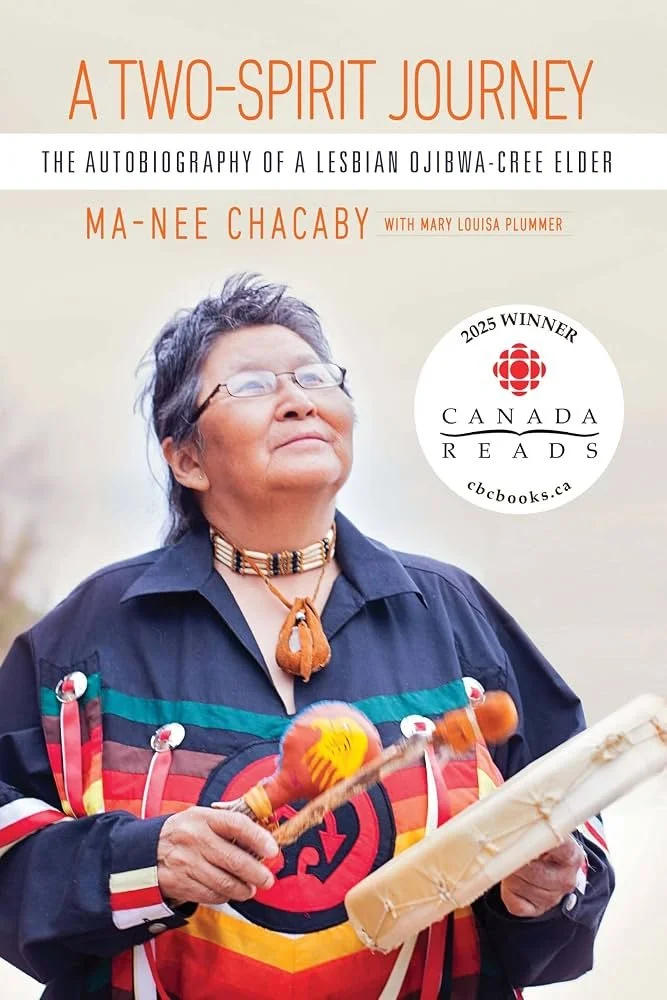
Bad Cree by Jessica Johns, A Two-Spirit Journey by Ma-Nee Chacaby, Boozhoo! / Hello! by Mangeshig Pawis-Steckley.
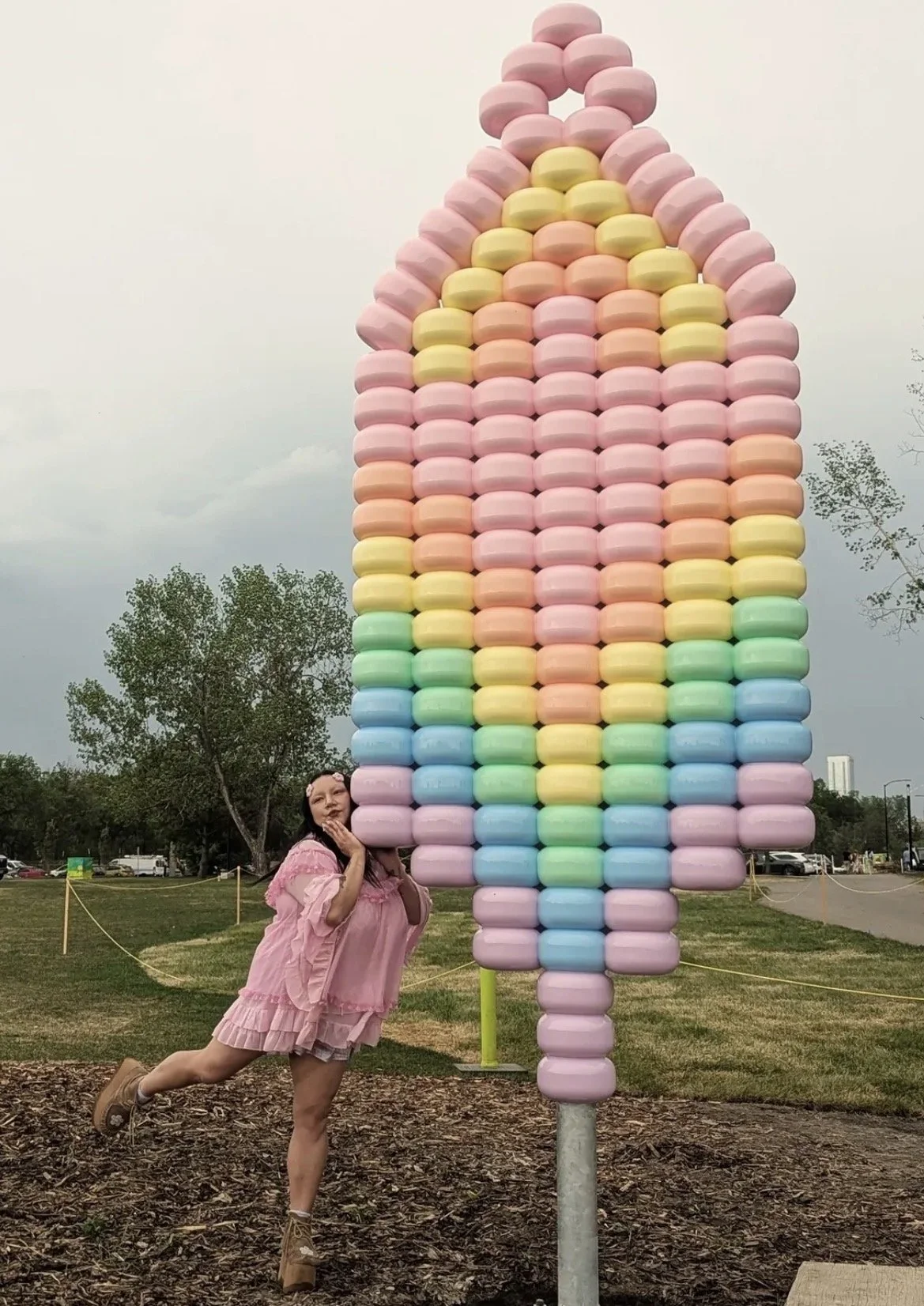
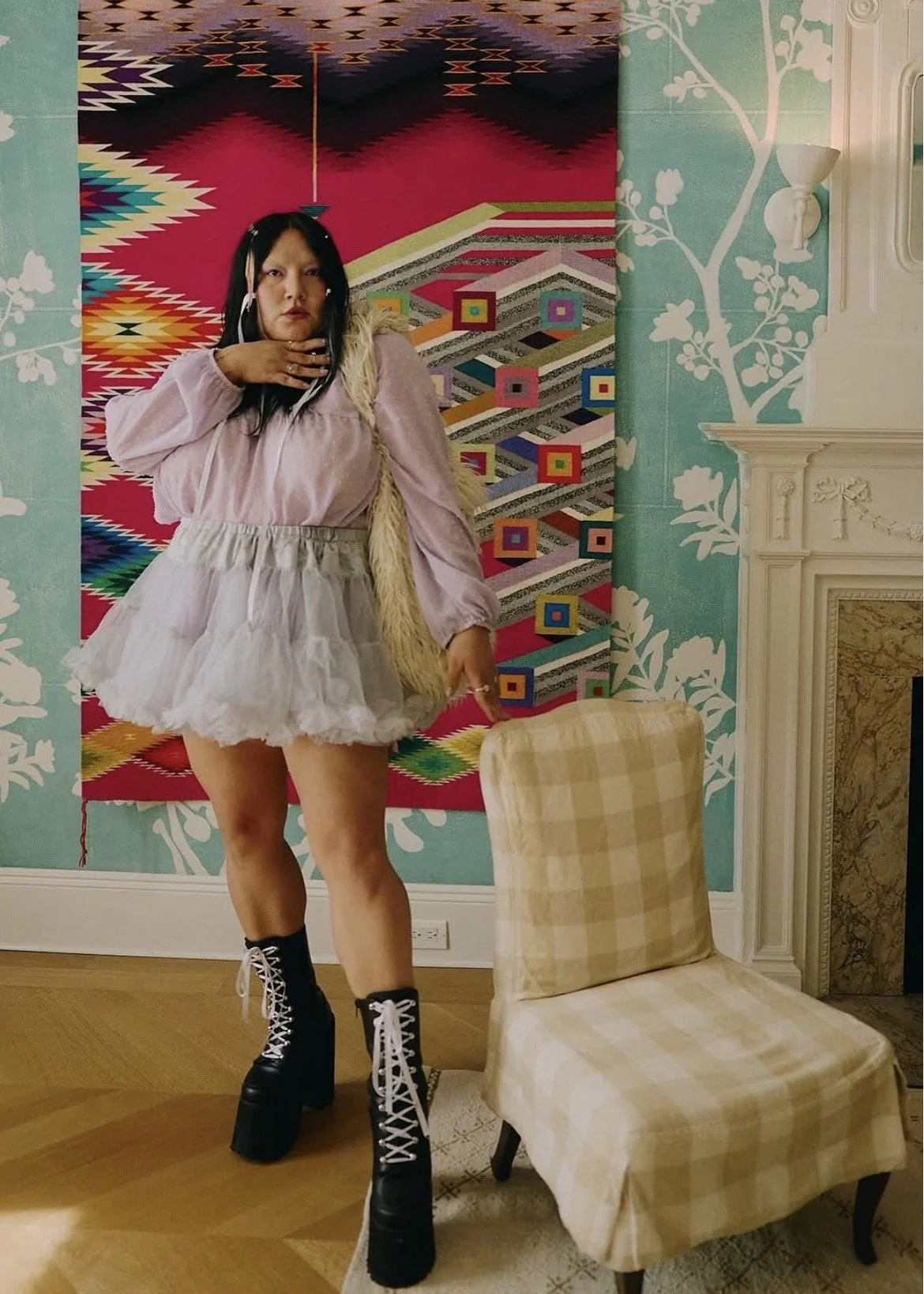
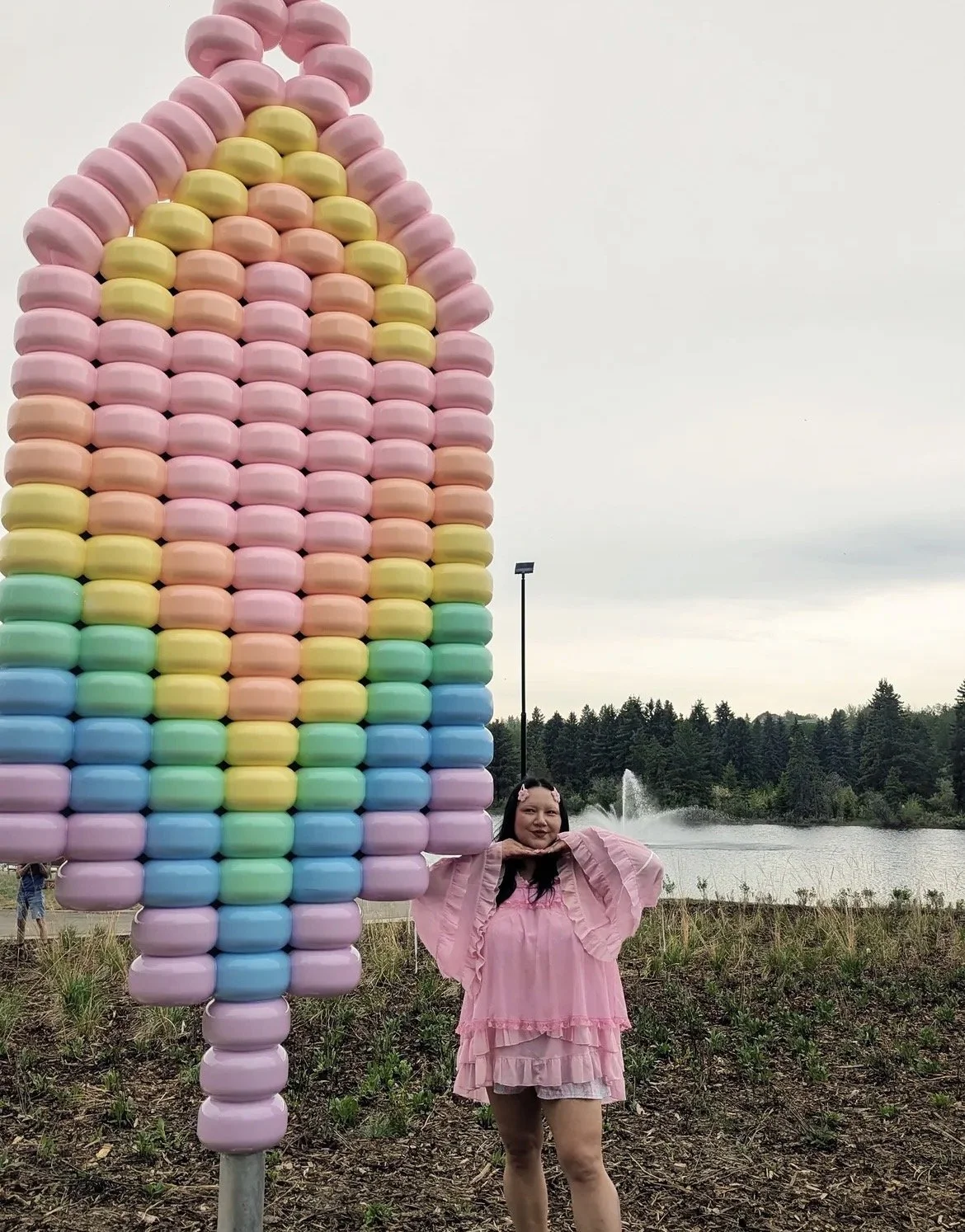
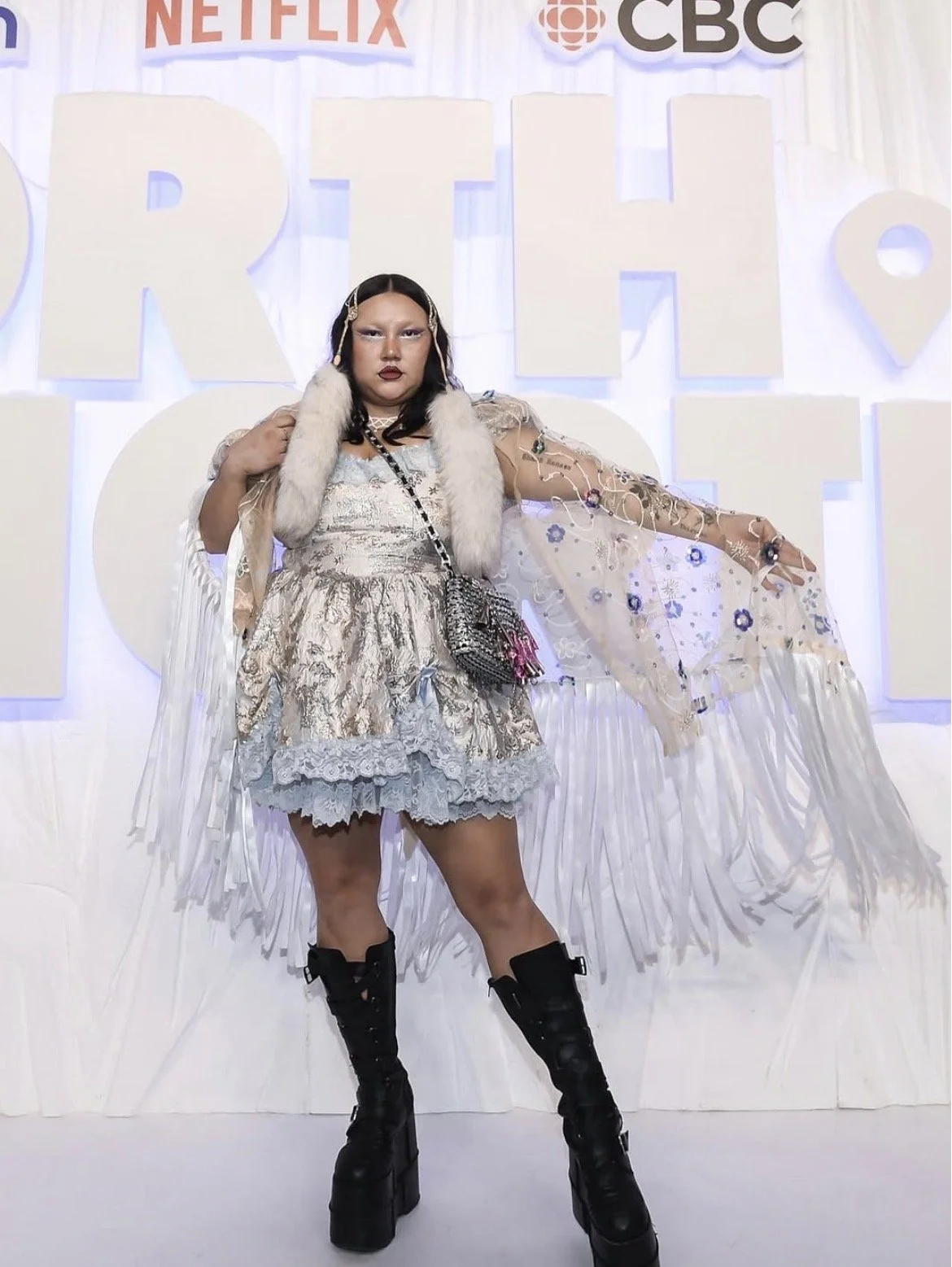
Cheyenne Rain LeGrande ᑭᒥᐊᐧᐣ is a Nehiyaw Isko artist, from Bigstone Cree Nation. She currently resides in Amiskwaciy Waskahikan also known as Edmonton, Alberta. Her work often explores history, knowledge and traditional practices. Through the use of her body and language, she speaks to the past, present and future. Bringing her ancestors with her, she moves through installation, photography, video, sound, and fashion and performance art. See more at cheyennerainlegrande.com.
